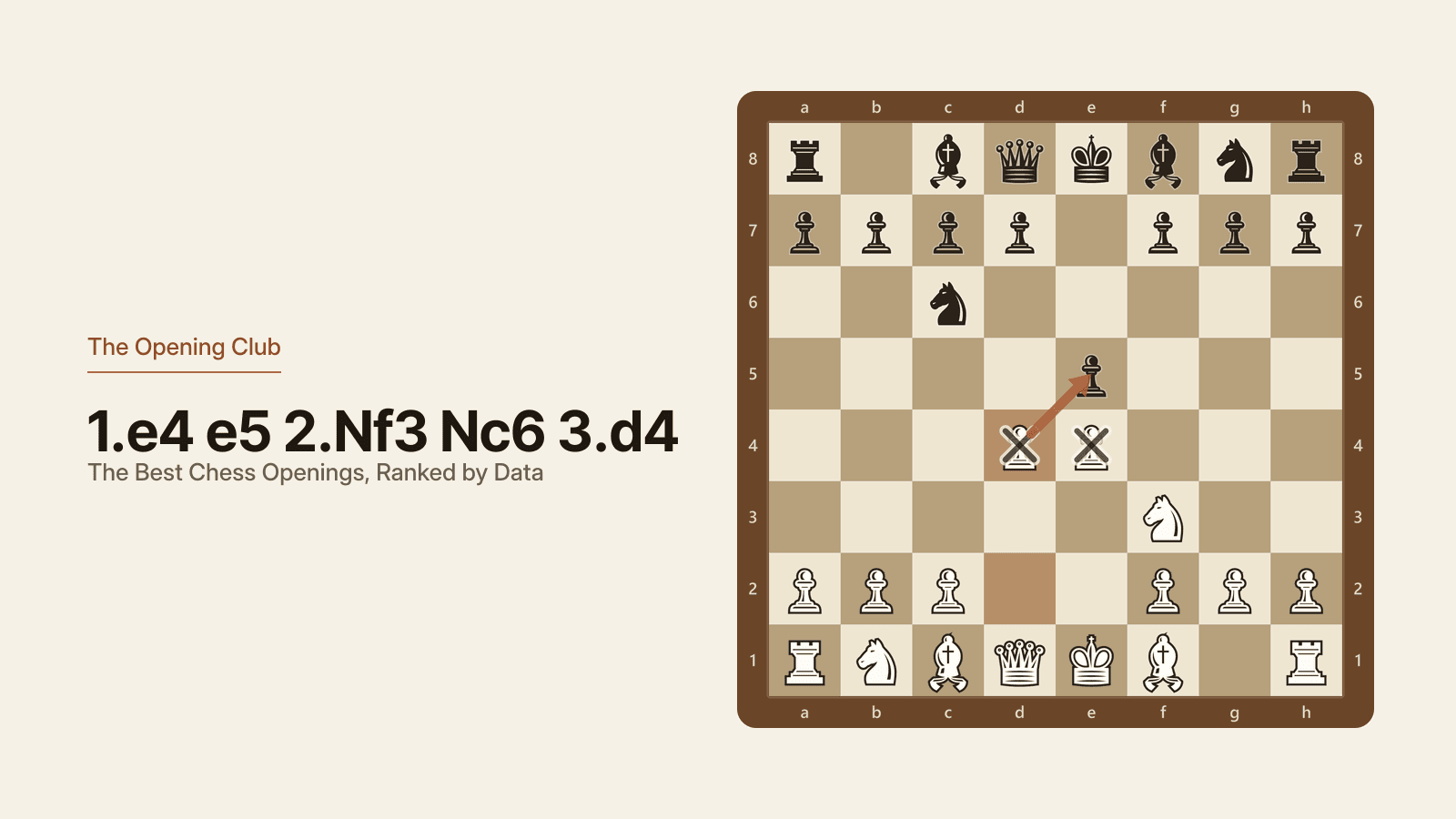
Ask ten club players to name the best chess openings and you get ten repertoires and zero numbers. This page is the other answer. We ranked 314 opening lines across 49.8 million rapid and blitz games from the Lichess open database (May 2026 snapshot), graded every line separately for White and for Black, and then did the whole thing again inside each of four rating bands. That last step matters more than anything else here, because the honest answer to "what is best" is not the same at 600 as it is at 1800.
Short version, for the impatient: at every band below 1800 the highest-scoring mainstream opening for White is the Scotch Game, not the Italian and not the London. For Black, the Sicilian Defense and the Caro-Kann Defense are the only two mainstream defenses that break even, and 1...e5, the move most beginners are taught first, is one of the worst-scoring replies in the entire dataset.
How we ranked them, and why it is not raw win rate
Raw win percentage is the wrong tool, and using it is how every "best openings" listicle ends up recommending a line somebody played 400 times.
Every line here is scored the way chess scores itself: wins plus half of draws, from the point of view of the side that chose the opening. We then rank by the Wilson lower bound on that score, a 95% confidence floor rather than the raw average. In plain terms, it asks "what is the worst this line could plausibly be, given how many games we have?" A line played two million times keeps almost all of its score. A line played two hundred times gets most of its score shaved off. That is deliberate: it is the single mechanism that stops a fashionable small-sample line from outranking a thoroughly tested one, and it is why our ranking looks different from lists built on the explorer's headline percentage.
Three more things about the numbers you are about to read:
The bands are 600, 1000, 1400 and 1800. They are Lichess rating-bucket lower bounds, not midpoints. There is no 800 or 1200 band in the data, so we never claim one.
The sample is 49.8 million games, not 185 million. Add up the games behind every line in the dataset and you get 185.4 million, but that figure counts one game once for every tracked position it passes through, because the position after five moves is a subset of the position after one. The disjoint total, taken from the fourteen first-move rows, is 49,783,179 games: 4.2 million in the 600 band, 14.1 million at 1000, 10.7 million at 1400 and 20.8 million at 1800. We say this out loud because a number without its shape is a number you cannot check, and because the inflated version is the easiest mistake to make with this data.
Every figure below carries its rating band and its sample size. If a figure appears without them, we got it wrong and you should tell us.
The overall ranking
Here is the ranking table. Each cell is the Wilson lower bound on that side's score in that band, with the tier grade our opening tier list assigns. A score above 0.500 means the side that picked the opening is winning the exchange on average.
| Opening (defining moves) | Side | 600 | 1000 | 1400 | 1800 | Games at 1000 |
|---|---|---|---|---|---|---|
| Scotch Game (1.e4 e5 2.Nf3 Nc6 3.d4) | White | 0.546 A | 0.557 A | 0.549 A | 0.545 A | 394,743 |
| Queen's Gambit (1.d4 d5 2.c4) | White | 0.553 S | 0.550 A | 0.545 A | 0.542 A | 455,625 |
| King's Gambit (1.e4 e5 2.f4) | White | 0.522 B | 0.548 A | 0.546 B | 0.529 B | 164,805 |
| London, 2.Bf4 move order (1.d4 d5 2.Bf4) | White | 0.547 A | 0.542 B | 0.530 B | 0.528 B | 438,927 |
| Ruy Lopez (1.e4 e5 2.Nf3 Nc6 3.Bb5) | White | 0.535 A | 0.535 A | 0.532 A | 0.535 A | 369,070 |
| English Opening (1.c4) | White | 0.505 A | 0.528 B | 0.529 A | 0.530 A | 265,462 |
| Italian Game (1.e4 e5 2.Nf3 Nc6 3.Bc4) | White | 0.537 A | 0.526 A | 0.520 B | 0.518 B | 965,410 |
| Vienna Game (1.e4 e5 2.Nc3) | White | 0.515 B | 0.525 B | 0.528 B | 0.536 B | 332,383 |
| Sicilian Defense (1.e4 c5) | Black | 0.504 B | 0.507 B | 0.505 B | 0.497 A | 850,797 |
| Caro-Kann Defense (1.e4 c6) | Black | 0.508 B | 0.504 B | 0.507 B | 0.498 B | 658,827 |
| French Defense (1.e4 e6) | Black | 0.493 B | 0.499 A | 0.501 A | 0.497 B | 724,903 |
| Indian Defense (1.d4 Nf6) | Black | 0.500 B | 0.489 B | 0.489 B | 0.488 B | 338,880 |
| Scandinavian Defense (1.e4 d5) | Black | 0.479 B | 0.481 B | 0.492 B | 0.495 B | 947,614 |
| King's Pawn, 1...e5 (1.e4 e5) | Black | 0.469 B | 0.471 B | 0.472 C | 0.471 B | 5,115,257 |
| Slav Defense (1.d4 d5 2.c4 c6) | Black | 0.456 C | 0.469 C | 0.466 C | 0.465 C | 79,276 |
| Queen's Gambit Accepted (2...dxc4) | Black | 0.432 D | 0.426 D | 0.428 D | 0.434 D | 164,935 |
Two structural facts jump out of that grid before any individual opening does.
First, White's numbers are all higher than Black's. That is not a bug in the ranking, it is the first move. White scores roughly 51 to 53 out of 100 in almost every mainstream line, Black scores 46 to 50. Comparing a White opening's 0.55 against a Black defense's 0.50 is a category error, which is why the table labels the side and why the by-colour pages exist: openings for White and openings for Black.
Second, the ordering moves as you go right. The Italian is a top-three White opening at 600 and drops out of the top five by 1400. The Vienna does the opposite. The King's Gambit peaks at 1000 and fades. If someone hands you one ranked list with no rating attached, they have averaged away the only interesting thing in the data.
The best openings for White
1. The Scotch Game
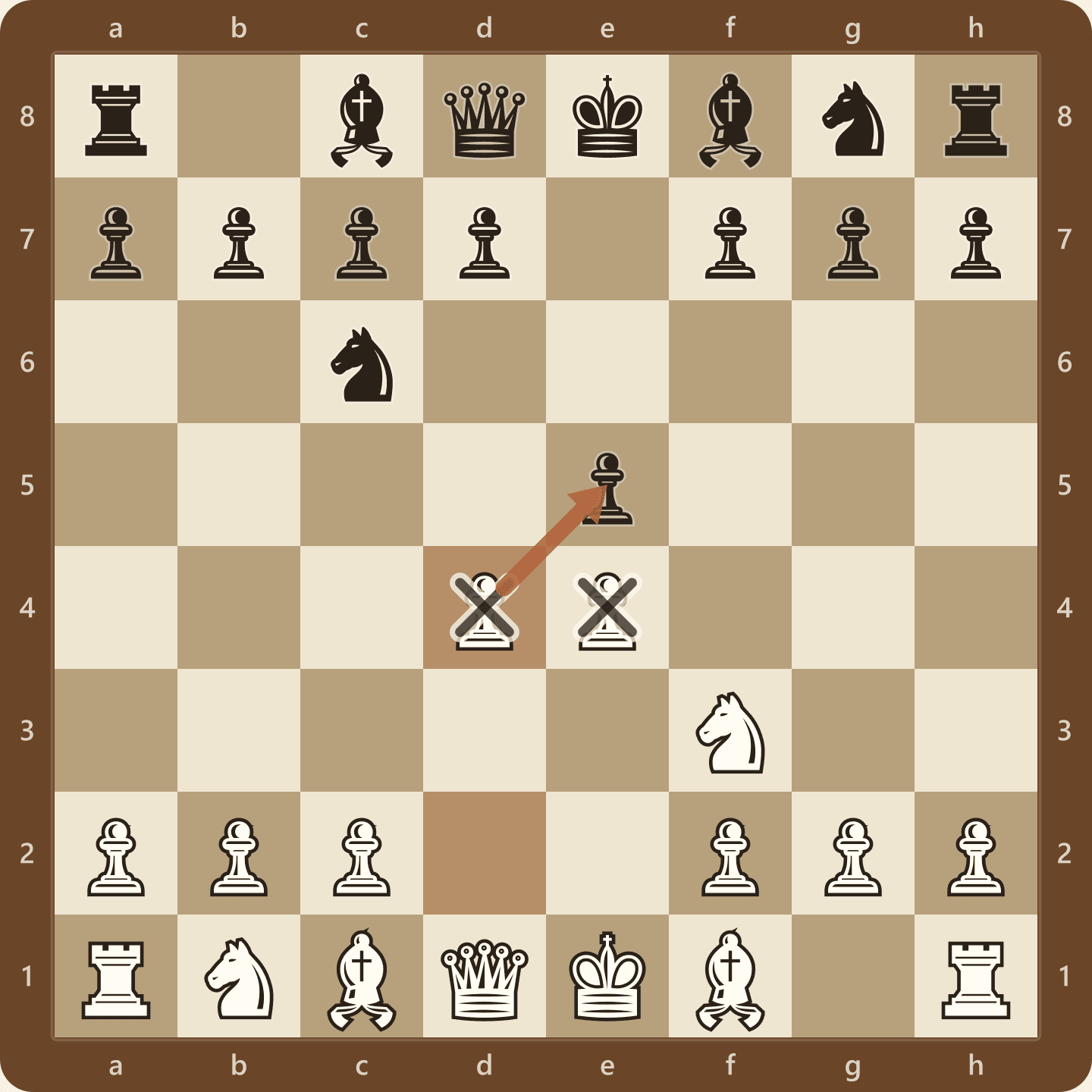
The Scotch is the highest-scoring mainstream White opening at 1000 (0.557 Wilson lower bound, 54.05% outright wins, 394,743 games) and it holds first or second place in all four bands. It is also the least fashionable opening on the list, which is roughly the point of doing this with numbers.
Why it works below master level is not mysterious. 3.d4 forces the centre open on move three, before Black has developed anything except a knight, and the resulting positions are decided by who can count tactics rather than by who has memorised more. Trade the pawn on d4, recapture with the knight, and you have a lead in development and a clear plan. There is very little to learn. Full write-up on the Scotch Game page.
2. The Queen's Gambit
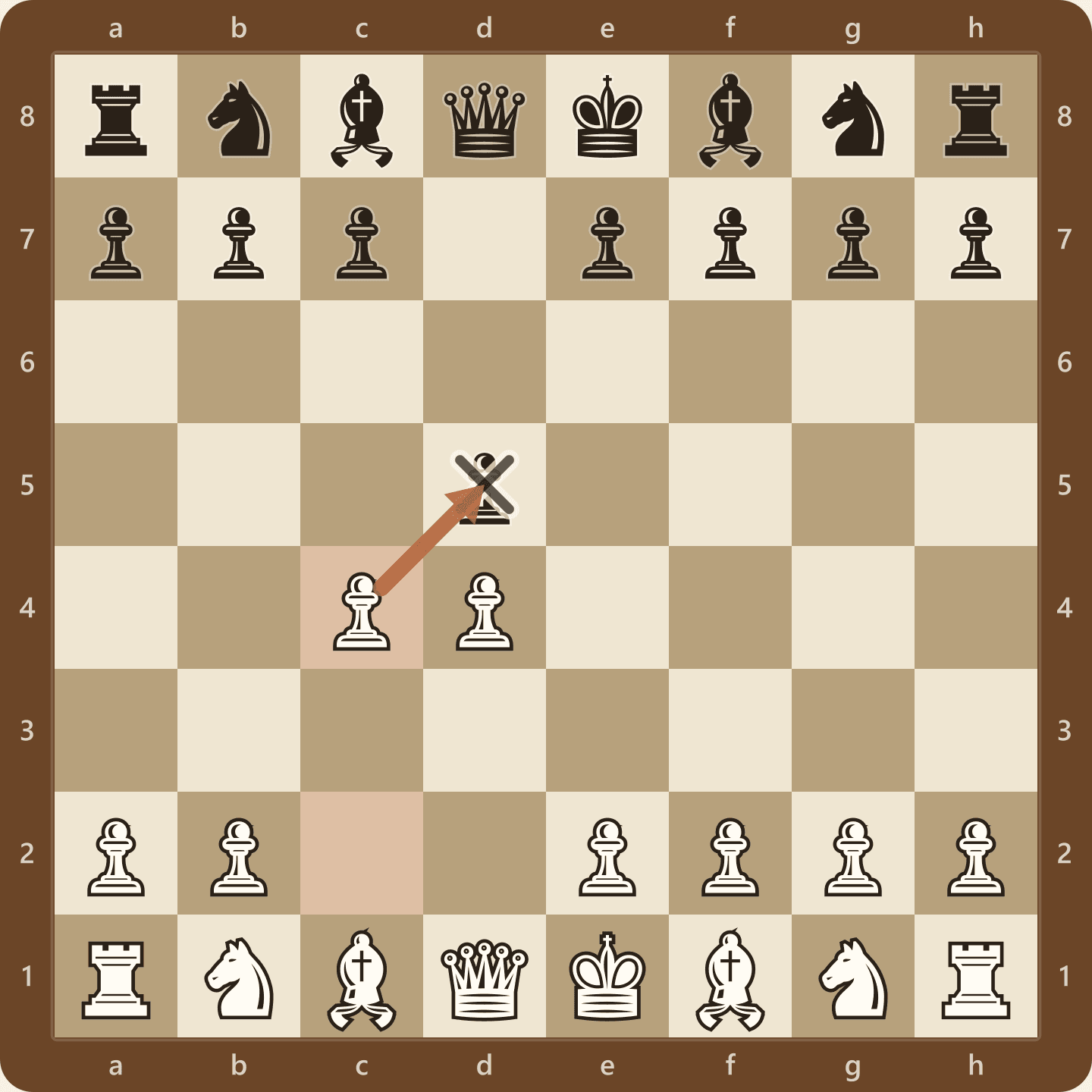
The Queen's Gambit is the top White opening at 600 (0.553, an S grade, 77,143 games) and stays in the top three everywhere else. It scores 53.34% at 1000 across 455,625 games. It is also the most instructive entry on this list, because of what happens next.
Accepting the pawn with 2...dxc4 is the lowest-scoring reply in our entire mainstream set: Black's Wilson lower bound is 0.426 at 1000 across 164,935 games, a D grade in every single band. That is a bigger gap than any opening-versus-opening comparison on this page. If you play 1.d4 and your opponent grabs on c4, you are already meaningfully better off than the average White player. Details on the Queen's Gambit Accepted page.
3. The London System
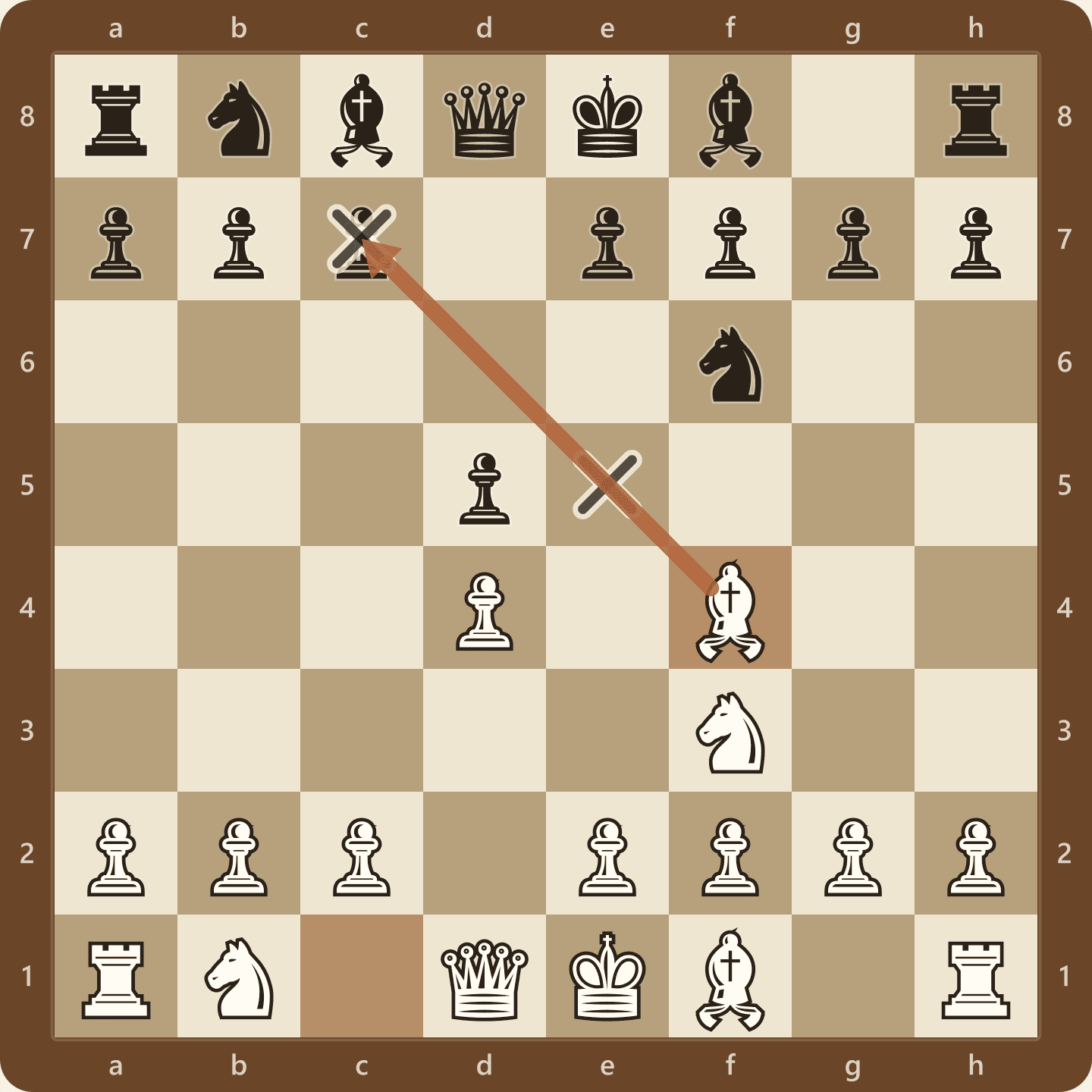
The London System is the internet's most complained-about opening and, at low ratings, one of its most effective. Played via the fast 2.Bf4 move order it grades 0.547 at 600 (99,835 games) and 0.542 at 1000 (438,927 games), better than the Italian at both.
But notice the drift: 0.530 at 1400, 0.528 at 1800, and the strict 1.d4 d5 2.Nf3 Nf6 3.Bf4 move order actually falls to a C grade by 1800 (0.522, 96,884 games). The London's value is that it is the same setup against everything, which is worth a lot when your opponents do not know how to punish it and progressively less when they do. That decay is the real answer to why everyone hates the London: not that it is bad, but that its edge is borrowed from the opponent.
4. The Ruy Lopez
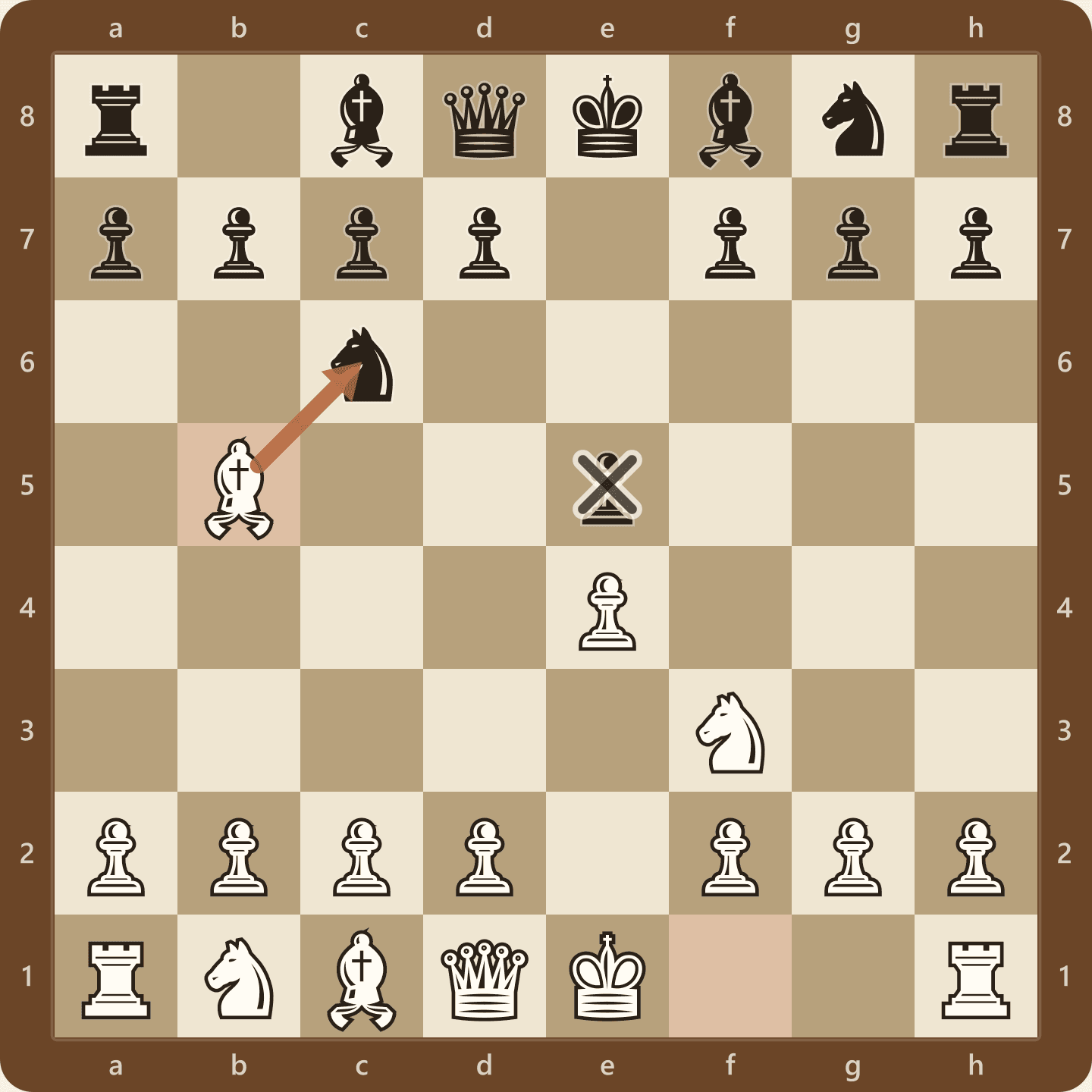
The Ruy Lopez is the flattest line in the dataset, and that is a compliment. Its Wilson lower bound reads 0.535, 0.535, 0.532, 0.535 across the four bands (369,070 games at 1000), an A grade at every level. Nothing else on this page holds an A from 600 to 1800.
The trade-off is honest: the Ruy Lopez has more theory than the Scotch and more branches than the London, and it rewards understanding rather than a memorised sequence. If you intend to keep playing chess for a decade, this is the one that never needs replacing.
5. The Italian Game
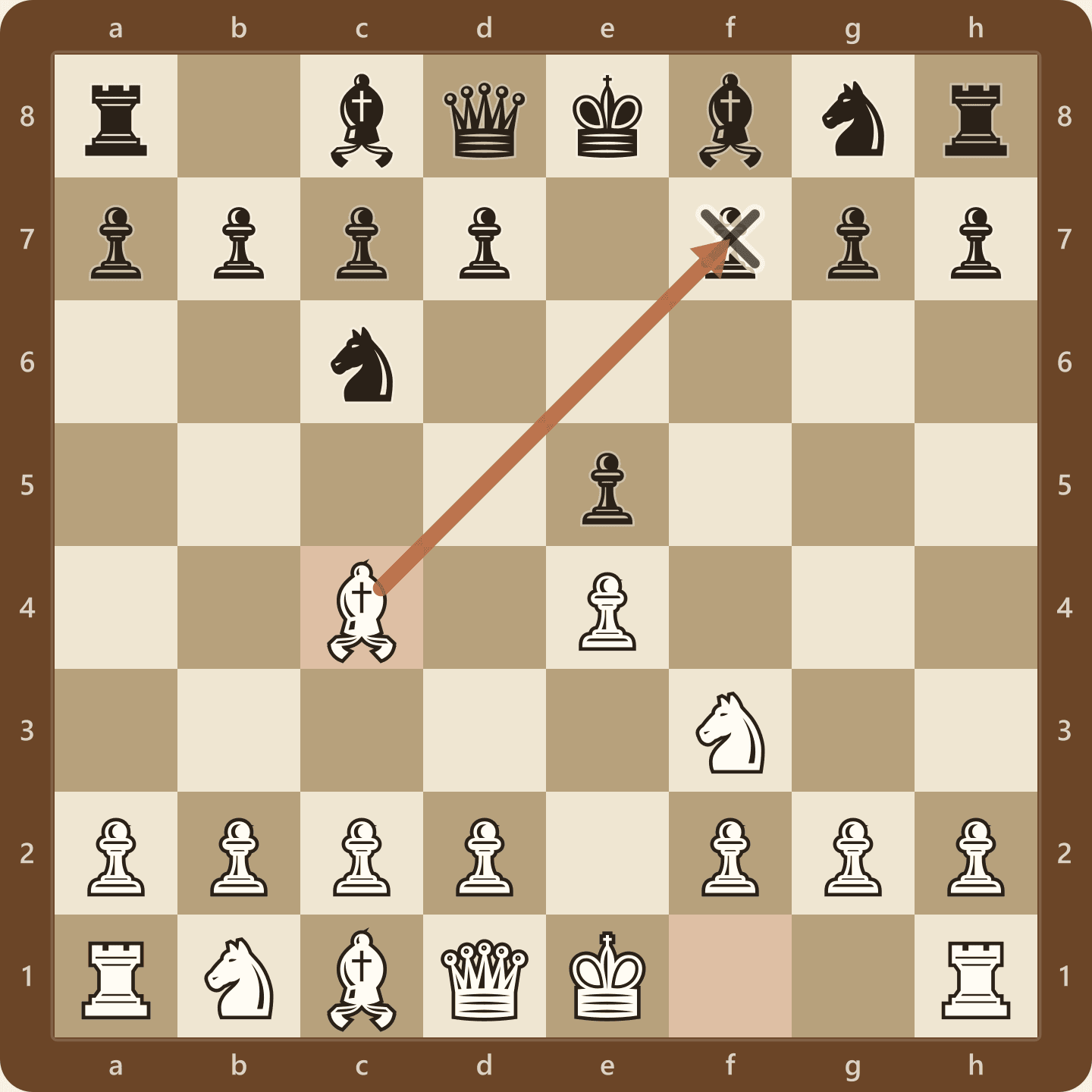
The Italian Game is the most-played opening in the set (965,410 games at 1000 alone) and it is genuinely good, just not as good as its reputation. It grades A at 600 and 1000, B at 1400 and 1800, and its score erodes steadily: 0.537, 0.526, 0.520, 0.518.
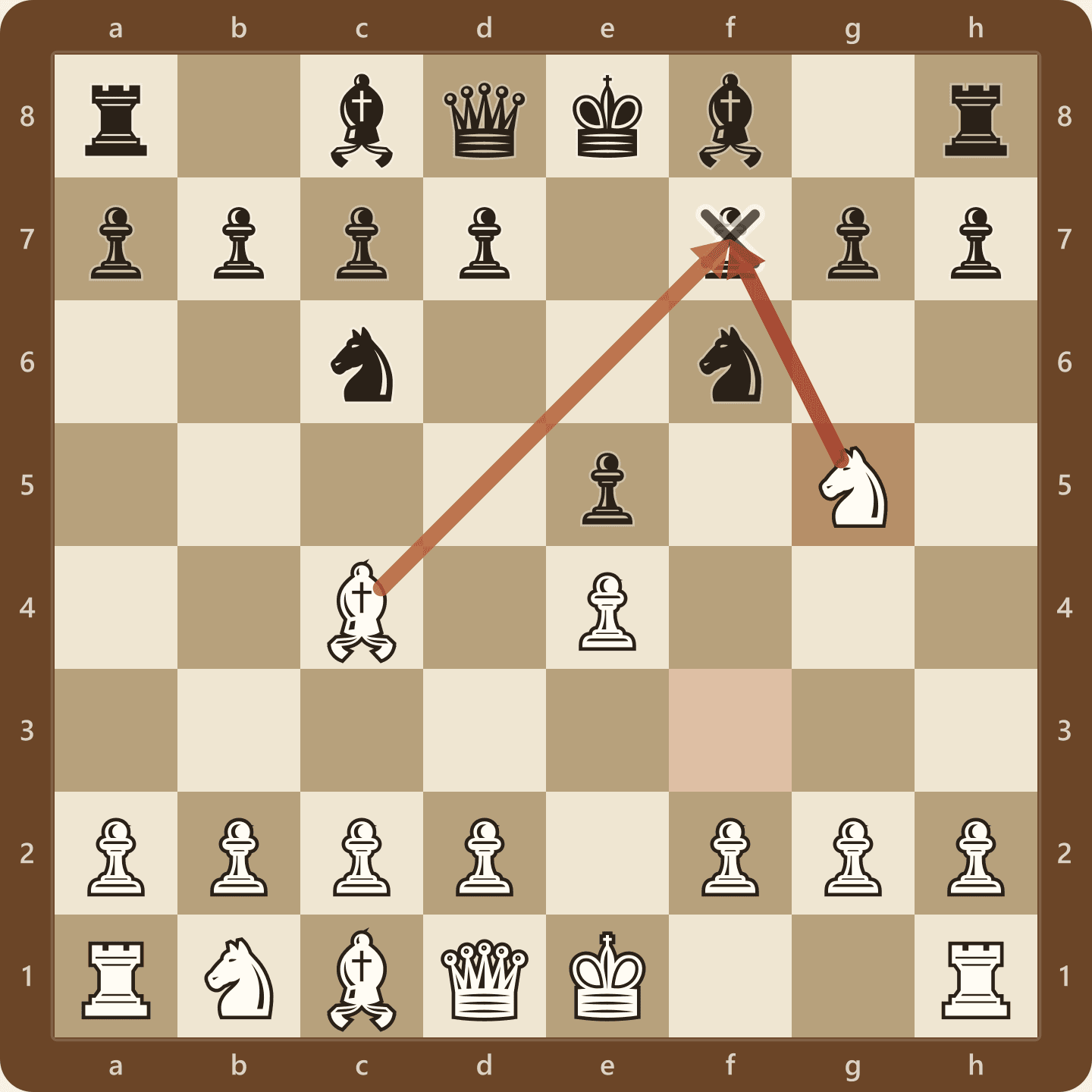
The erosion has a specific cause. The Italian's low-rating value comes from the f7 attack, and the f7 attack gets defused as opponents learn one move. Look at the aggressive branch: after 3...Nf6 4.Ng5, the line that leads to the Fried Liver family, White's grade is S at 600 (0.578, 37,919 games) and S at 1000 (0.555, 127,363 games), then B at 1400 and C at 1800 (0.515, 72,587 games). Same moves, opposite verdict, and the only thing that changed is who is sitting opposite.
Honourable mentions for White, all with real samples at 1000: the Vienna Game (0.525, 332,383 games, and the only mainstream White opening that gets steadily better by band, reaching 0.536 at 1800), the English Opening (0.528, 265,462 games), and the King's Gambit (0.548, 164,805 games, peaking hard at the 1000 band).
The best openings for Black
Black's job is different. No defense on this page reaches 0.510, because the first move is worth something real. The question is which defenses lose the least, and the answer is surprisingly stable.
1. The Sicilian Defense
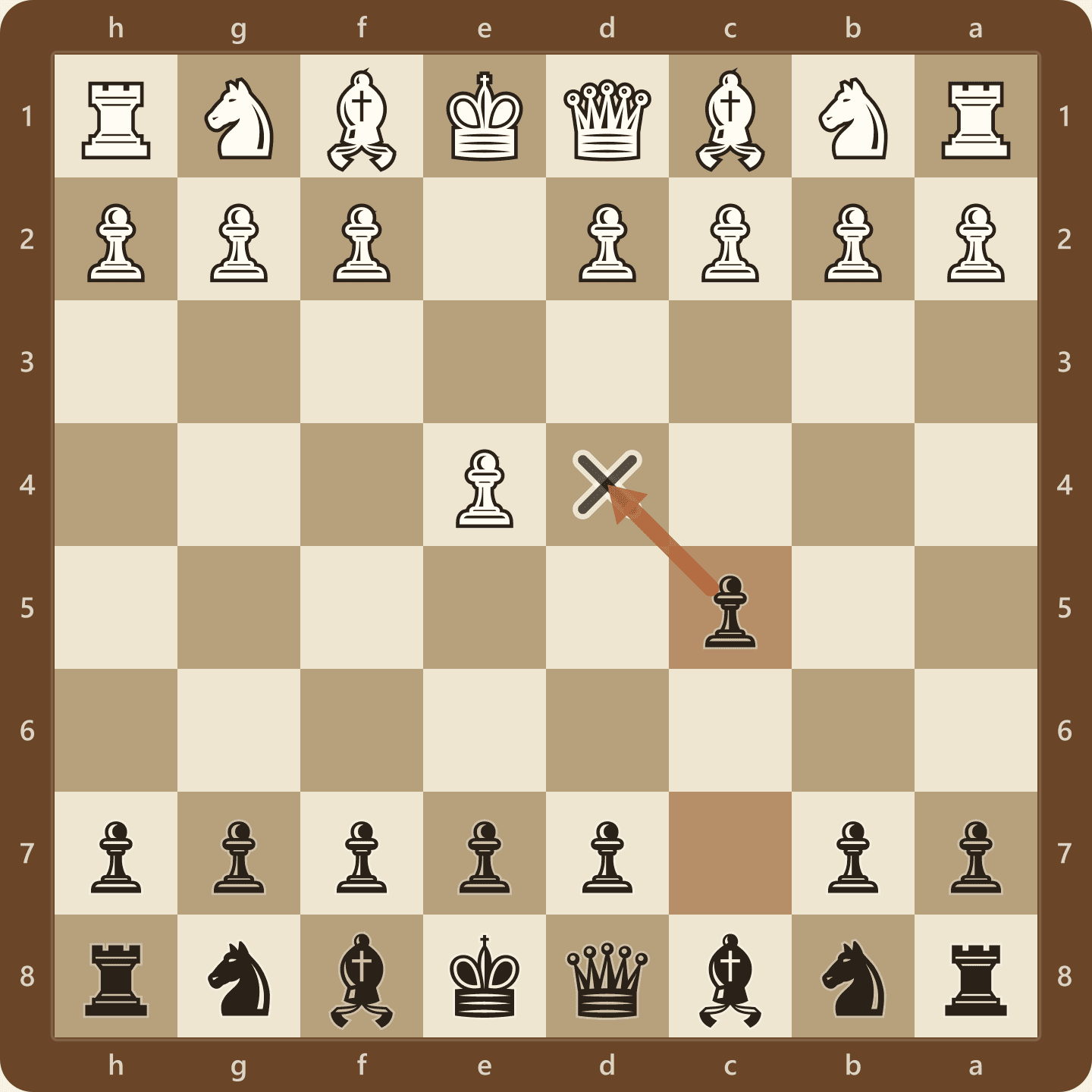
The Sicilian Defense is the best-scoring mainstream reply to 1.e4 at 600, 1000 and 1400. At the 1000 band it grades 0.507 across 850,797 games, and here is the figure worth pinning up: Black outright wins 49.12% of those games while White wins 47.54%. Black, moving second, wins more games than White does. That does not happen anywhere else in the mainstream data, and the best openings for Black page unpacks why.
The usual objection is theory load, and it is half right. You do not need the Najdorf. At the 1000 band the Sicilian's headline number is earned by ordinary club players making it up after move four, not by anyone who has read a book.
2. The Caro-Kann Defense
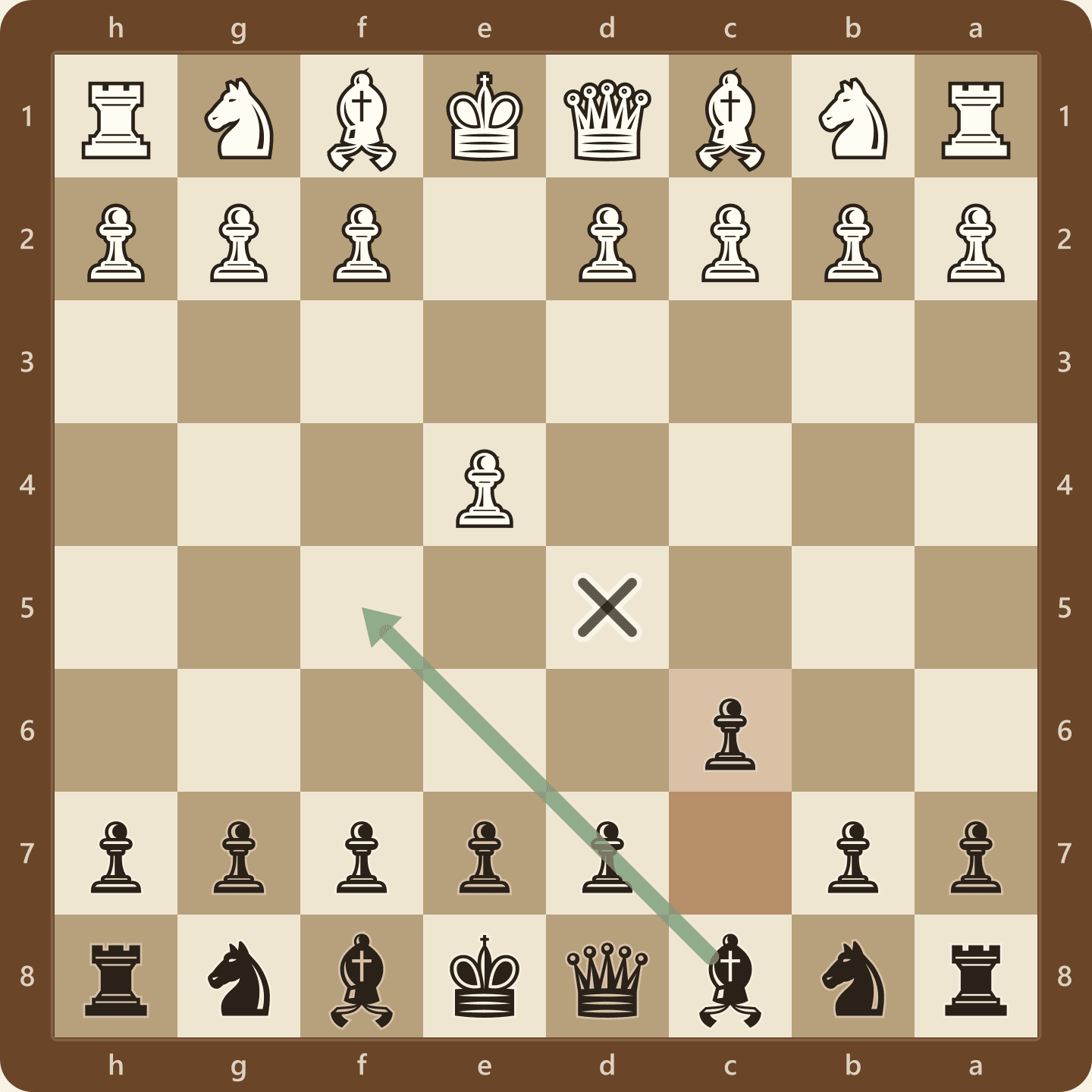
The Caro-Kann Defense is the single best reply to 1.e4 at the 600 band (0.508 across 127,035 games), ahead of the Sicilian, and it stays within a hair of the Sicilian everywhere else. It also has the lowest theory ceiling of the top defenses: you play ...c6 and ...d5 against essentially everything.
3. The French Defense
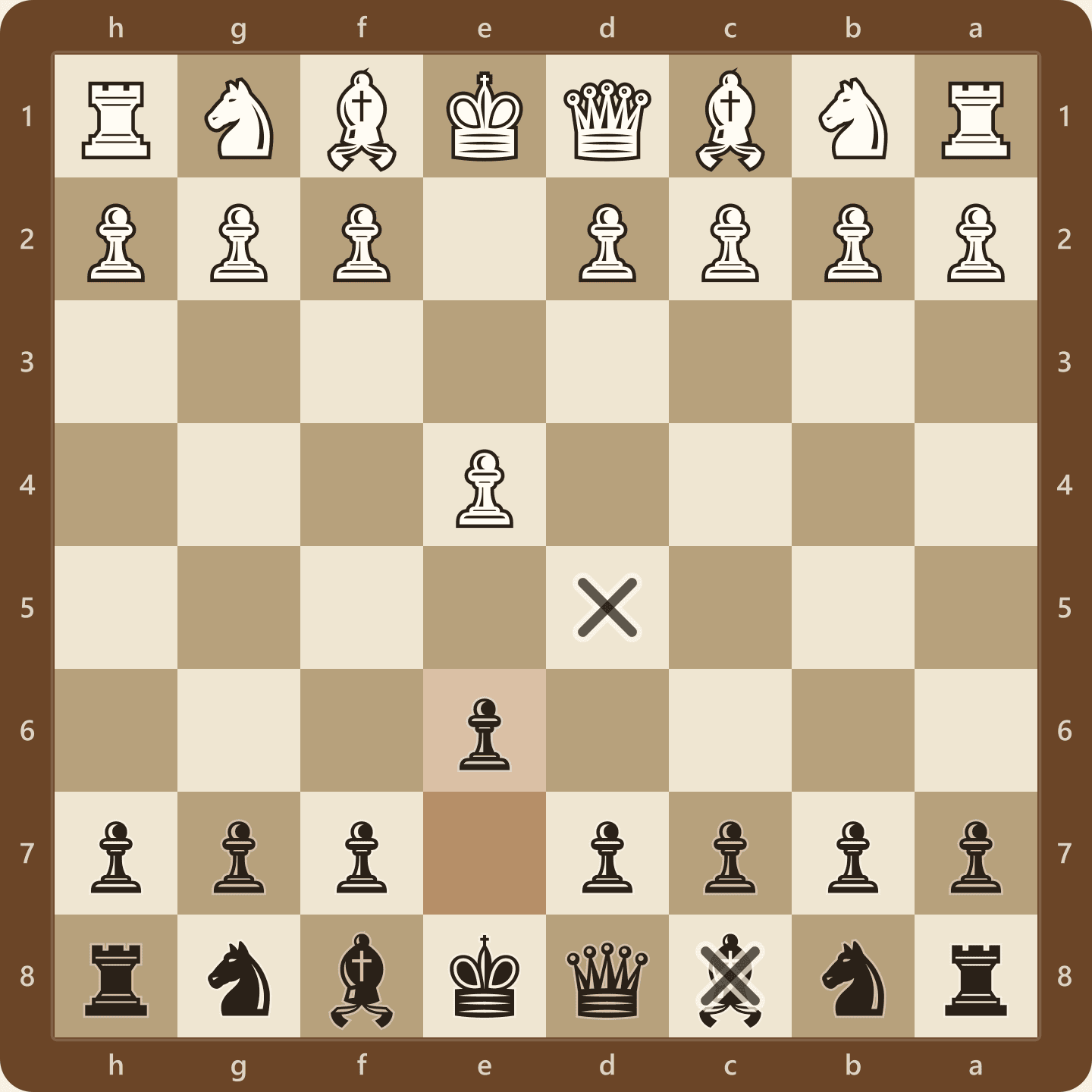
The French Defense grades A at 1000 (0.499, 724,903 games) and A at 1400 (0.501, 632,985 games), the only Black opening in our mainstream set that reaches an A grade in two consecutive bands. It is the choice for players who are comfortable defending a cramped position for twenty moves and then winning the endgame. If that sentence made you tired, play the Caro-Kann instead. The Caro-Kann versus French comparison goes through the actual decision.
The opening most beginners are handed, and should not be
1...e5 is what almost everyone is taught, and across 5,115,257 games at the 1000 band it grades 0.471, worse than the Sicilian, Caro-Kann, French, Modern, Indian, Pirc and Scandinavian. It is not that 1...e5 is unsound. It is that answering 1.e4 e5 walks straight into the openings White has practised most: the Italian, the Scotch, the King's Gambit, the Vienna and the whole f7 industry above. The standard classification calls 1.e4 e5 the Open Games for a reason: it is the branch of the tree with the most worked-out attacking paths, and White has walked them more often than you have.
The Scandinavian Defense deserves a note here because its two branches diverge sharply. The old main line with 2...Qxd5 grades 0.454 at 1000. The modern 2...Nf6 grades 0.502 at the same band (77,012 games) and reaches an A grade at 1400 and 1800. Same opening name, half a grade apart.
Against 1.d4, the Indian Defense (1...Nf6) leads the mainstream field at 0.489, with the Slav Defense at 0.469 and the Queen's Gambit Declined at 0.460. Two Black systems people ask about constantly, the King's Indian Defense and the Nimzo-Indian Defense, are too rarely played below 1400 for us to grade honestly. At the 1800 band, where the samples finally arrive, the Nimzo-Indian grades 0.489 (62,586 games) and the King's Indian 0.480 (81,854 games).
The first move itself
Before you pick an opening, you pick a first move, and the data on that is cleaner than the debate suggests.
| First move | 600 | 1000 | 1400 | 1800 | Share of games at 1000 |
|---|---|---|---|---|---|
| 1.e4 | 0.524 | 0.519 | 0.513 | 0.512 | 65.95% |
| 1.d4 | 0.522 | 0.527 | 0.524 | 0.524 | 22.41% |
| 1.c4 (English) | 0.505 | 0.528 | 0.529 | 0.530 | 1.87% |
| 1.Nf3 | 0.505 | 0.517 | 0.521 | 0.531 | 2.38% |
| 1.b3 (Nimzo-Larsen) | 0.504 | 0.515 | 0.517 | 0.514 | 0.83% |
| 1.f4 (Bird) | 0.463 | 0.506 | 0.514 | 0.520 | 0.74% |
| 1.b4 (Polish) | 0.467 | 0.537 | 0.534 | 0.531 | 0.32% |
| 1.g4 (Grob) | 0.432 | 0.491 | 0.499 | 0.526 | 0.30% |
1.e4 is the best first move at 600 and the worst of the big four from 1000 upward. 1.d4 is ahead of it at every band above 600 despite being played a third as often, and 1.c4 quietly outscores both from 1000 up. Full treatment on the 1.e4 versus 1.d4 page.
And now the caveat that most data articles skip. Look at 1.b4: 0.537 at the 1000 band across 45,809 games, the highest number in that column. The Wilson bound has already accounted for the sample size, so the number is real. What it does not account for is who chooses the move. Almost nobody plays 1.b4 by accident; the people who play it have studied it, and they are playing opponents who have not. That is a selection effect, not an opening advantage, and it is the reason we do not tell you to switch to the Polish Opening. Every ranking on this page carries some of that bias, and it is largest for the rarest openings.
What changes between 600 and 1800
The by-band movement is the actual story, and it goes in three directions.
Openings that decay. The Italian (0.537 to 0.518), the London (0.547 to 0.528), and the 4.Ng5 f7 attack (0.578 to 0.515). All three win by exploiting something the opponent has not learned yet. That is a perfectly good reason to play them now, and a reason to expect the returns to fall.
Openings that improve. The Vienna (0.515 to 0.536), the English (0.505 to 0.530), 1.Nf3 (0.505 to 0.531), and on Black's side the Scandinavian (0.479 to 0.495) and the modern 2...Nf6 Scandinavian in particular. These want a player who can handle a position without an immediate target.
Openings that never move. The Ruy Lopez, the Scotch, the Queen's Gambit, the Sicilian, the Caro-Kann and the French all sit inside a 0.015 band from 600 to 1800. They are not exploiting anything. They are just good.
If you only take one thing from this page: pick from the third group if you want an opening you will still be playing in three years, and from the first group if you want rating points this month. Our openings by rating band pages break each level down individually.
The two things this ranking does not measure
Win rate is a good instrument and a narrow one. Two things it misses matter enormously for anyone under about 1200.
Theory load. The dataset cannot tell you that the Sicilian has twenty times as many named branches as the London. We counted that separately, straight out of our 3,810-row opening book: 401 named ECO entries sit beneath 1.e4 c5 and 5 beneath 1.d4 d5 2.Bf4. Score and study cost are separate axes, and for a beginner the second one is often decisive, which is why the beginner ranking weights differently from this page.
How often somebody just hangs a piece. Our companion blunder dataset (1,193 rows, 97,740 games, mat-swing-v1 material-swing methodology, July 2026, and note that it is a far smaller sample than the 49.8 million above) puts the games-weighted blunder rate at 44.8% in the 600 band, 44.8% at 1000, 41.0% at 1400 and 36.9% at 1800. The 600 and 1000 figures are a tie, not a decline.
That is the number to hold next to everything above. The gap between the best mainstream opening in a band and a merely decent one is roughly two points of score. The gap between a game with a material-losing mistake in it and one without is the whole game. We are not going to pretend an opening choice competes with that. The blunder rate by rating page has the full breakdown.
One thing we will not do with that dataset: rank individual openings by their blunder rate. At the per-opening level the measure is a depth artefact, because a line recorded five moves deep has more observed moves to blunder in than the same opening recorded one move deep, and the per-line cells run to a median of about 40 games. It supports band-level statements and nothing finer, so that is all we use it for.
Which is the real argument for opening principles over opening memorisation. Control the centre, develop toward it, get the king castled, do not move the same piece twice before you have finished. Four rules, no memorisation, and they keep working in positions no book covers. How much theory you need has the study-time arithmetic.
The openings we could not rank
Several entries that a list of this kind normally includes are missing from ours on purpose.
The Catalan Opening, the Grünfeld Defense, the Benko Gambit, the Evans Gambit (1.e4 e5 2.Nf3 Nc6 3.Bc4 Bc5 4.b4), the Marshall Attack and the Stonewall have no rows at all in our win-rate dataset, at any band. They exist in our move database with verified lines, but the explorer sample we ingested never reaches them, so we have no score to publish and we are not estimating one. They are ungraded, which is a different statement from "they are bad".
The Fried Liver Attack proper (the position after 6.Nxf7) is in the same position: no stats rows. What we can give you is its parent, the 4.Ng5 Knight Attack quoted above, which is the branch point every Fried Liver game passes through. The Fried Liver Attack page uses that line and says so.
A separate problem is thin coverage rather than none. The Najdorf has only 221 games in the 600 band, so its grade there is a statement about our sample rather than about the opening. The Wilson lower bound already penalises exactly this, which is why we rank on it, but it is worth naming: where a line's sample is small, its position in our order is a floor, not a measurement.
A missing number is not a small problem to solve with a guess. It is the whole reason this site exists.
Frequently asked questions
What is the #1 best chess opening?
For White below 1800, the Scotch Game (1.e4 e5 2.Nf3 Nc6 3.d4), which scores a 0.557 Wilson lower bound at the 1000 band across 394,743 games and holds a top-two place in every band. For Black, the Sicilian Defense at 600 through 1400 and the Caro-Kann Defense at 600 specifically. There is no single number-one across both colours, because White and Black are not playing the same game.
What is Magnus Carlsen's favourite chess opening?
He does not have one, and that is the interesting part. Carlsen's repertoire is famously broad, and world champions have historically chosen openings to dodge preparation rather than to maximise a win rate. Our data covers rapid and blitz games in the 600 to 1800 range on Lichess, so it says nothing about what works at the top and should not be read as though it does.
What is the deadliest chess opening?
By score at low ratings, the 4.Ng5 branch of the Two Knights Defense: an S grade at both 600 (0.578, 37,919 games) and 1000 (0.555, 127,363 games). It is also the clearest example of a line whose edge evaporates as you climb, falling to a C grade at 1800. The full case, including which aggressive lines survive the climb and which do not, is on the aggressive openings page.
What openings do grandmasters use?
Mostly the Ruy Lopez, the Italian, the Queen's Gambit, the Sicilian Najdorf, the Nimzo-Indian and the Slav, and this is the single most over-weighted input into amateur opening choice. Grandmasters pick openings for positions they can outplay other grandmasters in. Our sample tops out at the 1800 band, so we make no claim about master play, and neither should a list that has not measured it.
Are the openings YouTubers recommend actually good?
Often yes, but for a reason the videos rarely state. Levy Rozman (GothamChess) and similar channels lean heavily on the London, the Caro-Kann and the Italian, and all three do grade well in our data at the ratings their audience plays at. The London at 0.547 (600 band) and 0.542 (1000 band) genuinely works there. Just note that the London's number falls every band after that, so a recommendation that is right for you at 900 may not be right for you at 1500.
How many chess openings do I actually need to know?
One as White, one against 1.e4, and one against 1.d4. Three total. The reason is proportion: the gap between the best opening in your band and a merely decent one is about two points of score, while 44.8% of games in the 600 band and 44.8% at 1000 contain a material-losing mistake (97,740 games, mat-swing-v1 methodology, July 2026). A fourth opening is not the thing standing between you and 1200.
Numbers move. We re-cut this ranking whenever the explorer snapshot updates, and the opening win-rate tables always carry the current figures with their sample sizes attached.