Most lists of chess openings for beginners rank on one thing: whether a titled player likes the opening. This one ranks on two, because a beginner pays for an opening in two currencies, its score at your actual rating and the amount of theory sitting underneath it.
The short answer, if you want it now. As White: the Queen's Gambit, which scores a 0.553 Wilson lower bound in the 600 rating band across 77,143 games, the best mainstream figure at that level. As Black: the Caro-Kann Defense, at 0.508 across 127,035 games, the best reply to 1.e4 at 600 and one of the cheapest to learn. The London System scores nearly as well, on a fraction of the study time, and comes with a problem we will get to.
What "best for a beginner" actually means
Score is one axis. A second one matters more at 600 than it ever will again.
Theory load. Every opening sits on top of a tree of named lines. We counted them directly: the ECO book in our database holds 3,810 named openings, and we can count how many of them descend from any given starting move. The London System has 4. Answering 1.e4 with 1...e5 puts you at the top of 1,033. That is not a measure of what you must memorise. It is a measure of how much of the board's literature your opponent might have read and you have not, and it is the closest thing to an objective study-cost number we can give you.
One caveat on that count, because it is ours and we would rather you knew how it was built: it matches named ECO entries by their move prefix, so a line reachable by two different move orders can be counted under both, and a named entry is not the same thing as a line you have to learn. Read it as an order-of-magnitude comparison, not a homework total.
And one axis we deliberately did not use. We also hold a blunder dataset, and the obvious move would be to rank openings by how often each one produces a blunder. We checked, and that measure does not survive inspection: at the per-opening level it is a depth artefact. A line recorded five moves deep shows more blunders than the same opening recorded one move deep, simply because more moves have been observed. The per-line cells are thin as well, a median of about 40 games. So we are not ranking or comparing openings on blunder rate anywhere on this page.
What the blunder data does support is a band-level statement, and it is the most useful thing on this page for a 600-rated player. Games-weighted across everything we cover, the blunder rate runs 44.8% at the 600 band, 44.8% at 1000, 41.0% at 1400 and 36.9% at 1800. Note that 600 and 1000 are a tie, not a decline. Nearly half of all games at your level contain a material-losing mistake, which is a far bigger lever on your results than any opening choice below.
Score figures come from the Lichess open database (May 2026 snapshot), 49.8 million rapid and blitz games across the four bands, of which 4.2 million sit in the 600 band, ranked by Wilson lower bound as explained on the main ranking page. That statistic also does the small-sample work for us: a line with a few hundred games has most of its headline score shaved off, which is why some famous openings sit lower here than their reputations suggest.
The beginner ranking
| Opening | Side | Score at 600 | Named lines beneath it | Games at 600 |
|---|---|---|---|---|
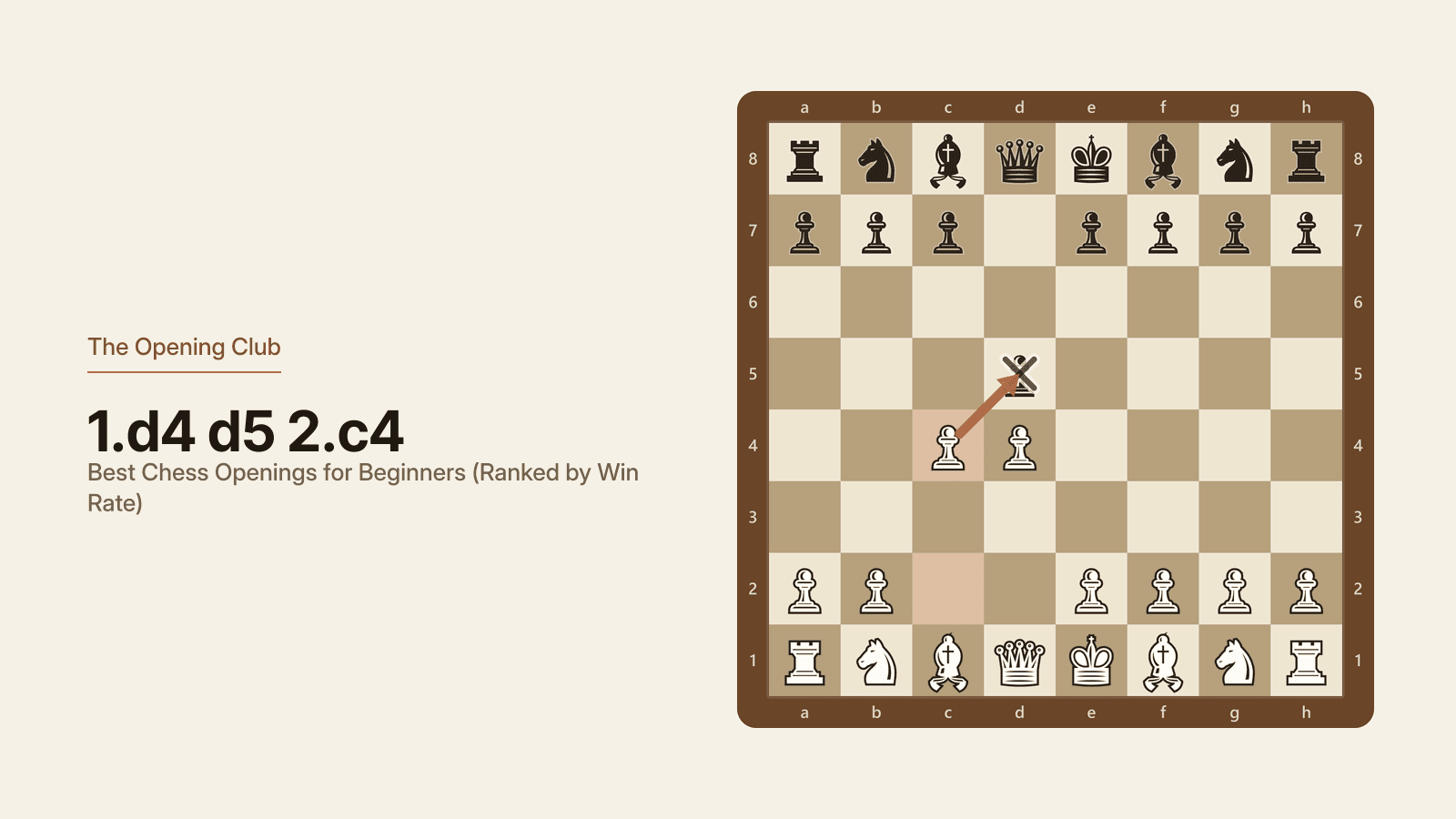
| Queen's Gambit (1.d4 d5 2.c4) | White | 0.553 S | 322 | 77,143 |
| Accelerated London (1.d4 d5 2.Bf4) | White | 0.547 A | 5 | 99,835 |
| Scotch Game (1.e4 e5 2.Nf3 Nc6 3.d4) | White | 0.546 A | 59 | 75,690 |
| Italian Game (1.e4 e5 2.Nf3 Nc6 3.Bc4) | White | 0.537 A | 184 | 217,726 |
| Ruy Lopez (1.e4 e5 2.Nf3 Nc6 3.Bb5) | White | 0.535 A | 235 | 64,749 |
| Bishop's Opening (1.e4 e5 2.Bc4) | White | 0.529 A | 38 | 228,138 |
| Wayward Queen Attack (1.e4 e5 2.Qh5) | White | 0.524 A | 8 | 162,535 |
| King's Gambit (1.e4 e5 2.f4) | White | 0.522 B | 190 | 27,129 |
| Center Game (1.e4 e5 2.d4) | White | 0.517 B | 29 | 111,727 |
| Vienna Game (1.e4 e5 2.Nc3) | White | 0.515 B | 58 | 114,542 |
| English Opening (1.c4) | White | 0.505 A | 202 | 57,286 |
| Caro-Kann Defense (1.e4 c6) | Black | 0.508 B | 110 | 127,035 |
| Sicilian Defense (1.e4 c5) | Black | 0.504 B | 401 | 130,324 |
| Indian Defense (1.d4 Nf6) | Black | 0.500 B | 677 | 60,759 |
| French Defense (1.e4 e6) | Black | 0.493 B | 214 | 163,083 |
| Scandinavian Defense (1.e4 d5) | Black | 0.479 B | 48 | 306,387 |
| Queen's Pawn (1.d4 d5) | Black | 0.476 B | 448 | 457,398 |
| King's Pawn (1.e4 e5) | Black | 0.469 B | 1,033 | 1,775,723 |
| Slav Defense (1.d4 d5 2.c4 c6) | Black | 0.456 C | not counted | 9,881 |
| Philidor Defense (2...d6) | Black | 0.455 C | 42 | 106,766 |
| Queen's Gambit Accepted (2...dxc4) | Black | 0.432 D | not counted | 34,031 |
| Petrov's Defense (2...Nf6) | Black | 0.428 D | 56 | 142,567 |
The White picks
1. The Queen's Gambit
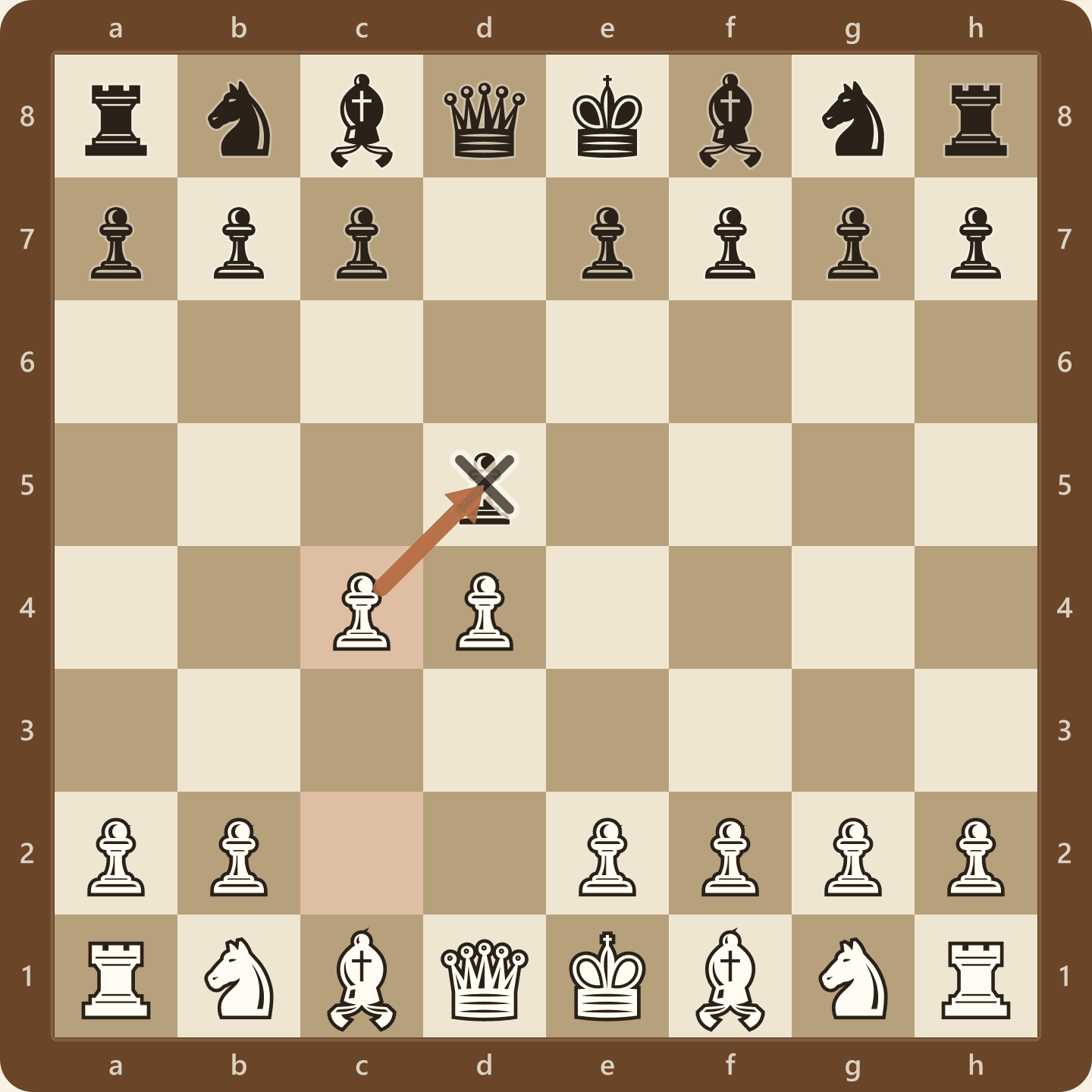
The Queen's Gambit is the only mainstream opening on this page with an S grade at 600. It also has the friendliest reason for it: the reply beginners find most natural, taking the pawn with 2...dxc4, grades D for Black in all four bands (0.432 at 600 across 34,031 games). You are not memorising a refutation. You are just playing 3.e3 and being better.
Its 322 named lines look intimidating in the table, and mostly are not: you will meet 2...e6, 2...dxc4 and 2...Nf6 for about 90% of your games and can learn one plan against each.
2. The London System, with a warning
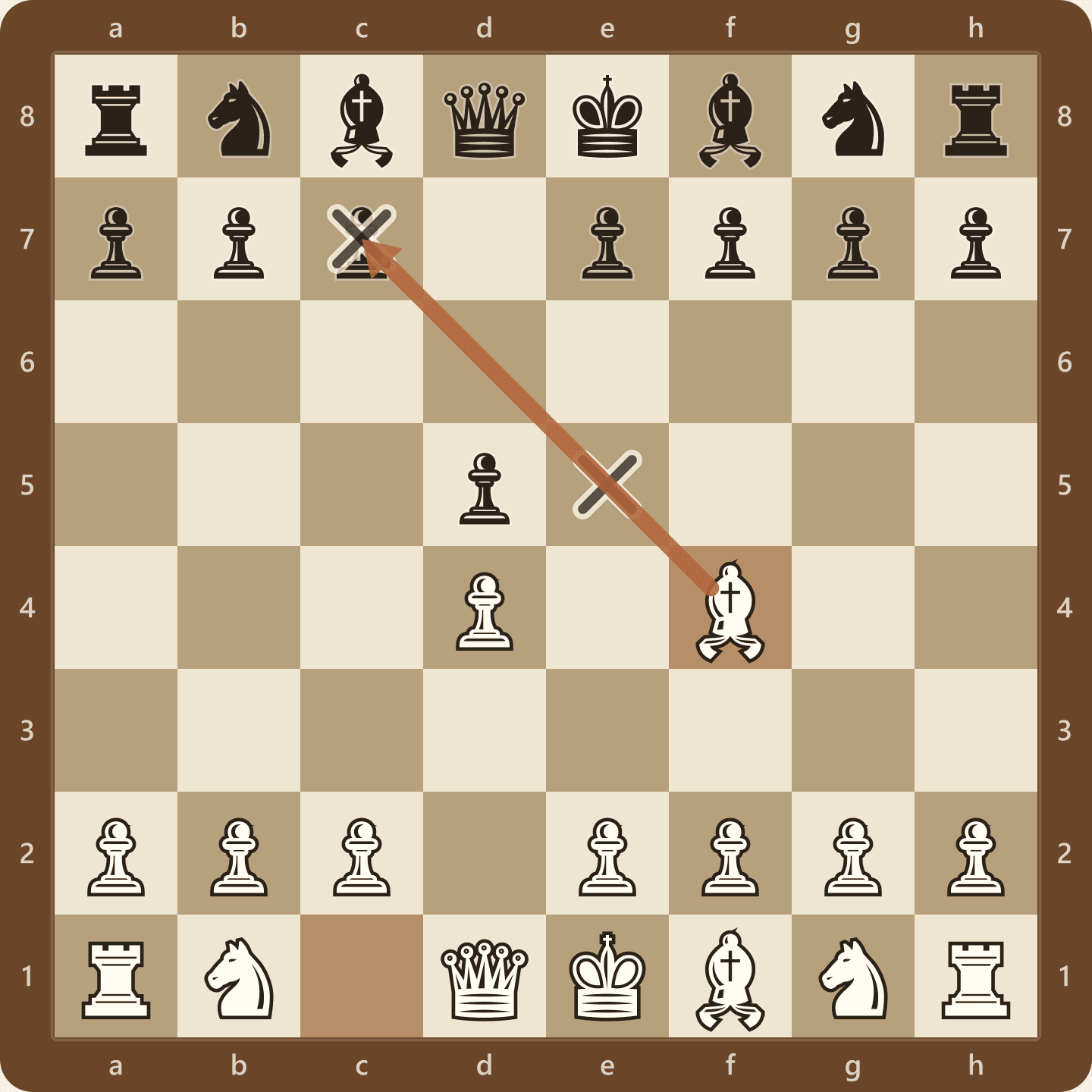
The London System scores 0.547 at the 600 band across 99,835 games and carries a theory load of five named lines. On the two axes everyone talks about, it is the best beginner opening in existence.
The warning is in the other three columns of the same row. The London scores 0.547 at 600, then 0.542 at 1000, 0.530 at 1400 and 0.528 at 1800, and its strict 1.d4 d5 2.Nf3 Nf6 3.Bf4 move order falls all the way to a C grade at 1800 (0.522 across 96,884 games). It is the steepest decay of any opening in the top half of our ranking.
That pattern is what an opening looks like when its edge is borrowed from the opponent rather than owned. The London teaches a shape rather than a plan, which is exactly what a beginner needs and exactly what stops paying once opponents know how to meet it. It is a good first opening and a bad only opening, and you should expect to replace it.
3. The Scotch Game
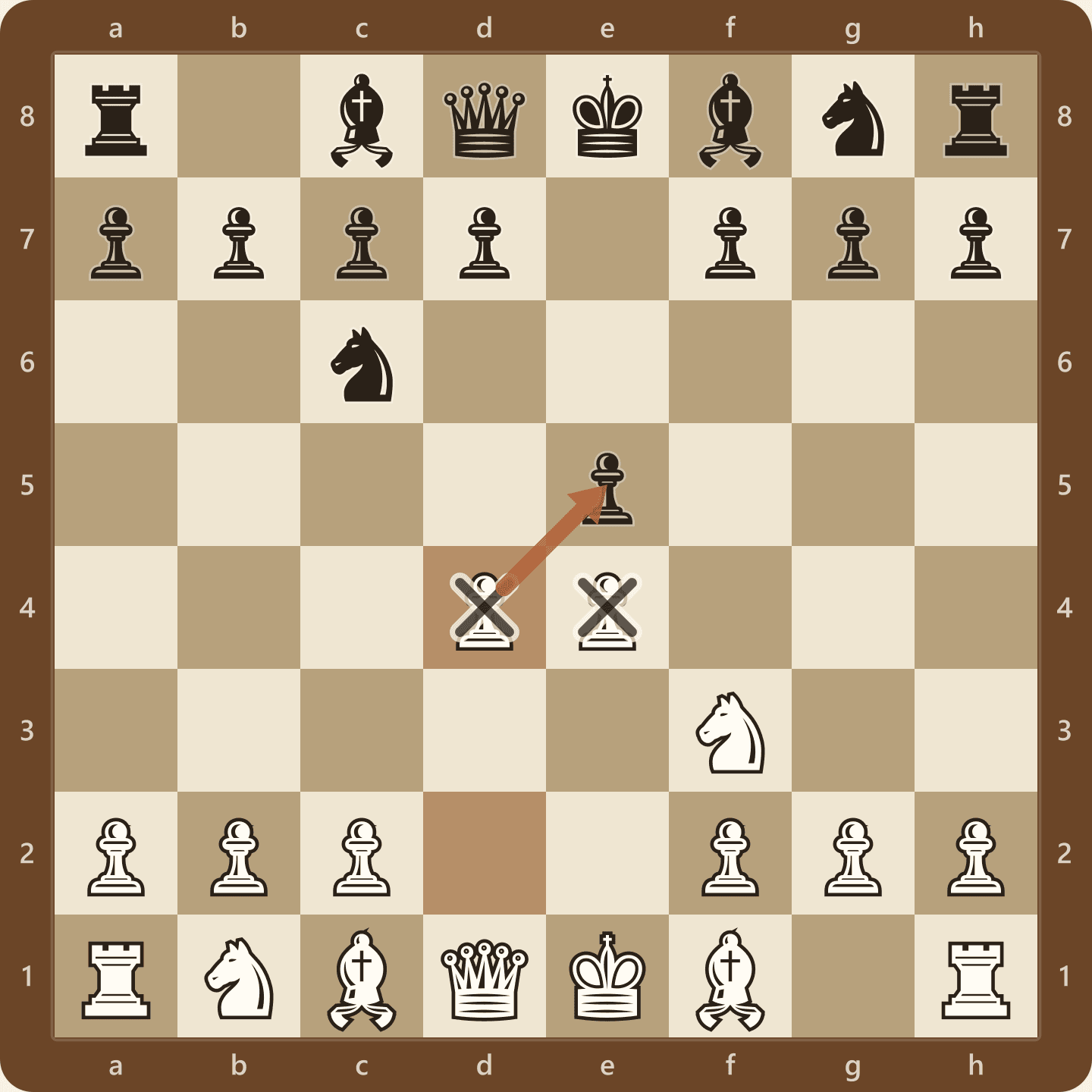
The Scotch Game is the best 1.e4 opening on both axes at once: 0.546 at 600 across 75,690 games, and only 59 named lines beneath it against the Italian's 184 and the Ruy Lopez's 235. It is also the only opening near the top of this page that does not decay: 0.546, 0.557, 0.549, 0.545 across the four bands.
What you get for those 59 lines is a plan rather than a shape. Play d4, trade on d4, recapture with the knight, and you are ahead in development with the centre open. That is a sentence a 600-rated player can execute, which is the actual test.
The Italian, the Ruy Lopez and the Bishop's Opening
The Italian Game grades A at 600 (0.537 across 217,726 games) and it is the most-recommended beginner opening on the internet, including on Chess.com's own list. It is a fine choice with one honest caveat: its score falls every band, 0.537 to 0.518, and 184 named lines sit beneath it.
The Ruy Lopez grades A at 600 (0.535, 64,749 games) and, uniquely, A at every other band too: 0.535, 0.535, 0.532, 0.535. Nothing else on this page is that flat. The cost is 235 named lines. Bobby Fischer, Garry Kasparov and Hikaru Nakamura have all built repertoires on it, which tells you it has a ceiling, not that it is a good place to start.
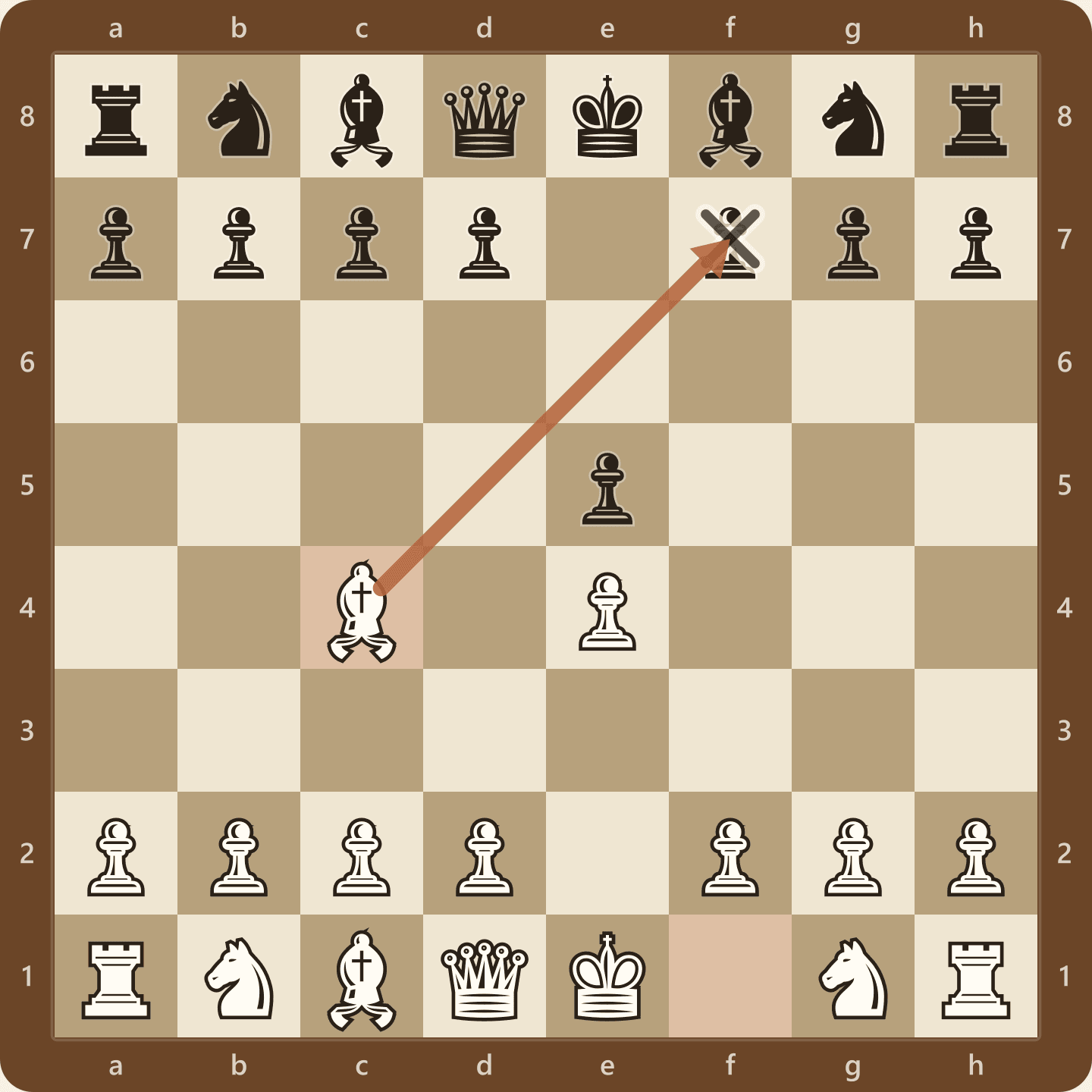
The Bishop's Opening (1.e4 e5 2.Bc4) is the quiet winner of the theory-load contest among 1.e4 openings: 38 named lines against the Italian's 184, for 0.529 at 600 across 228,138 games. It is the same bishop pointed at the same square, one move earlier and with a fifth of the literature.
The Black picks
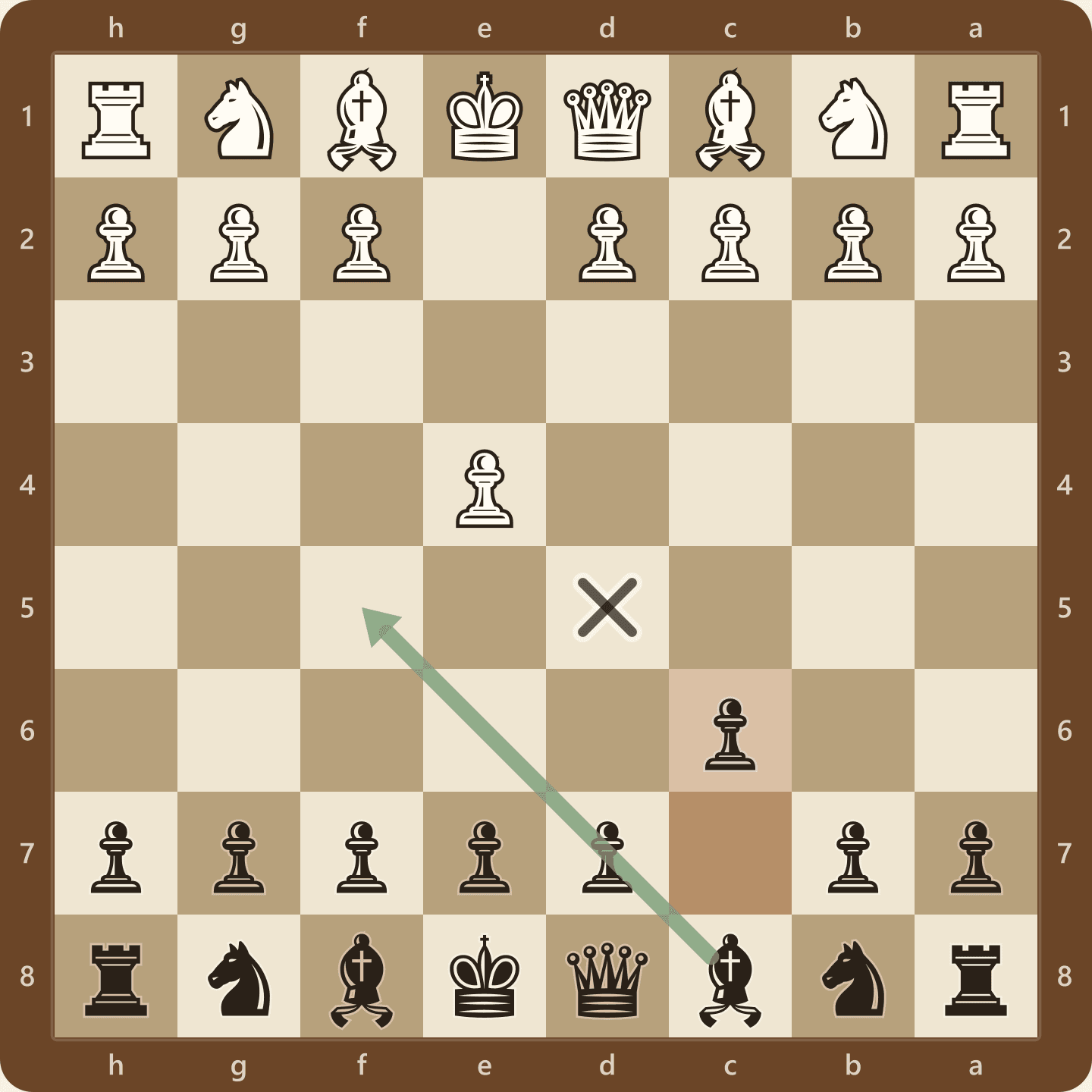
The Caro-Kann Defense leads at 0.508 across 127,035 games and needs one idea: play ...c6 and ...d5, and get the light-squared bishop out to f5 before you play ...e6. At 110 named lines it is less than a third the theory surface of the Sicilian.
The Sicilian Defense is right behind at 0.504 across 130,324 games, and it stays near the top in every band above 600 as well. Its problem for a beginner is those 401 named lines, genuinely the largest theory surface of anything worth playing. You can ignore almost all of it at 600, which is the point the next section makes.
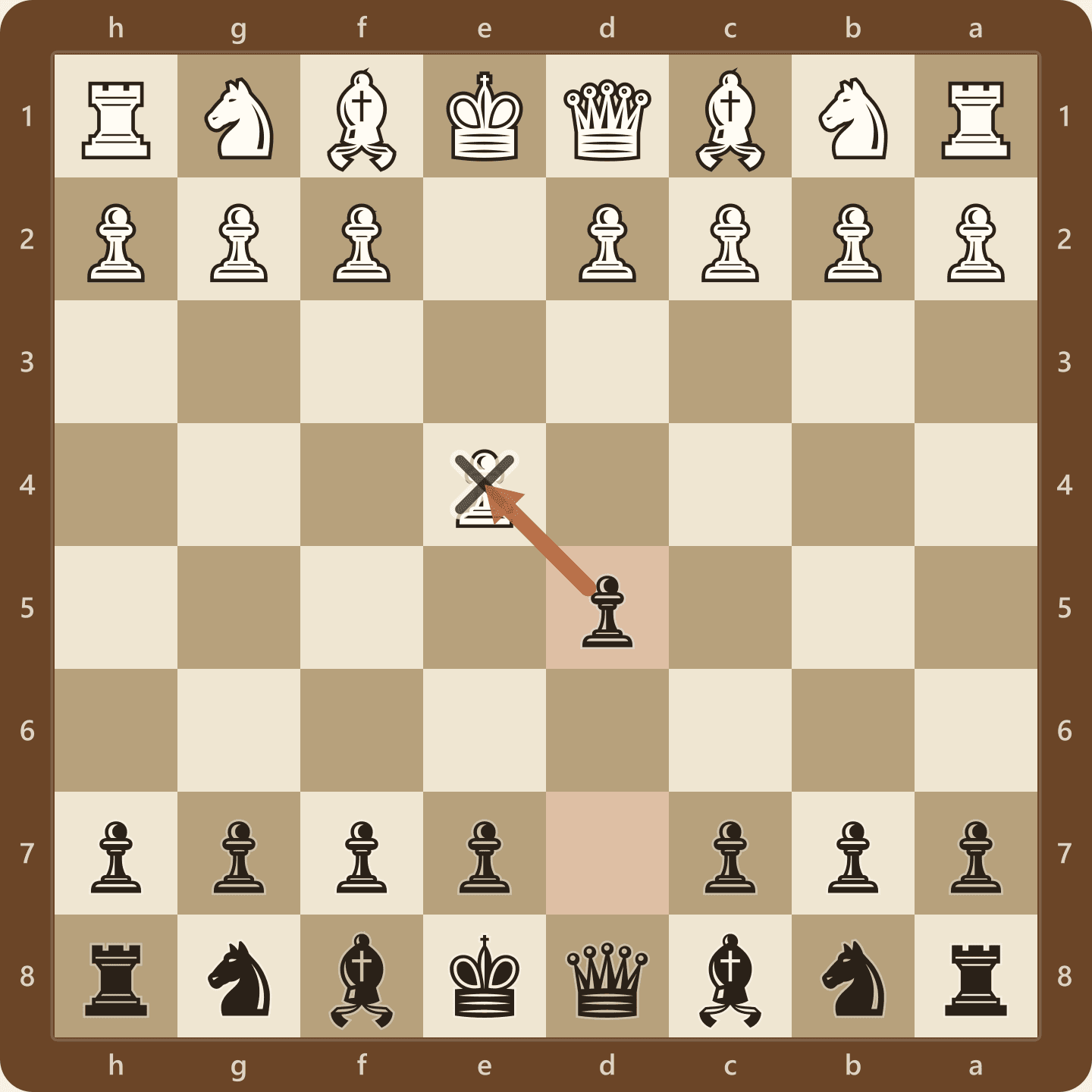
The Scandinavian Defense is the cheapest defense to learn (48 named lines) and it is the one most often recommended for exactly that reason, including by Chessable's beginner guides. Its score does not support the recommendation at 600: 0.479 across 306,387 games. If you do play it, play 2...Nf6 rather than 2...Qxd5, which is 0.497 against 0.436 at the 600 band.
The French Defense at 0.493 (163,083 games) is solid and demands patience. The Slav Defense grades C at 600 and every other band. Petrov's Defense (also spelled Petroff) grades D at 600, 0.428 across 142,567 games, the worst mainstream defense at this level: it is designed to reach equality, which is the wrong goal in a band where every game is decided by a blunder.
Against 1.d4, play 1...Nf6 (0.500 at 600 across 60,759 games) rather than 1...d5 (0.476 across 457,398). The King's Indian Defense is too rare below 1400 for us to grade honestly: 11,111 games at the 1000 band. We do not have a number for it at 600 worth printing.
Opening principles, and why they beat memorising
Here is the number that should reorganise your study plan, and it is not an opening number at all. Games-weighted across every line we cover, the blunder rate at the 600 band is 44.8%, and at the 1000 band it is still 44.8%. It does not start falling until 1400 (41.0%) and 1800 (36.9%).
Read that against the gaps in the ranking table. The whole spread between the best mainstream White opening at 600 and a merely decent one is about two points of score. The spread between a game with a material-losing mistake in it and one without is the game. At your level the opening is a rounding error sitting next to the actual variable.
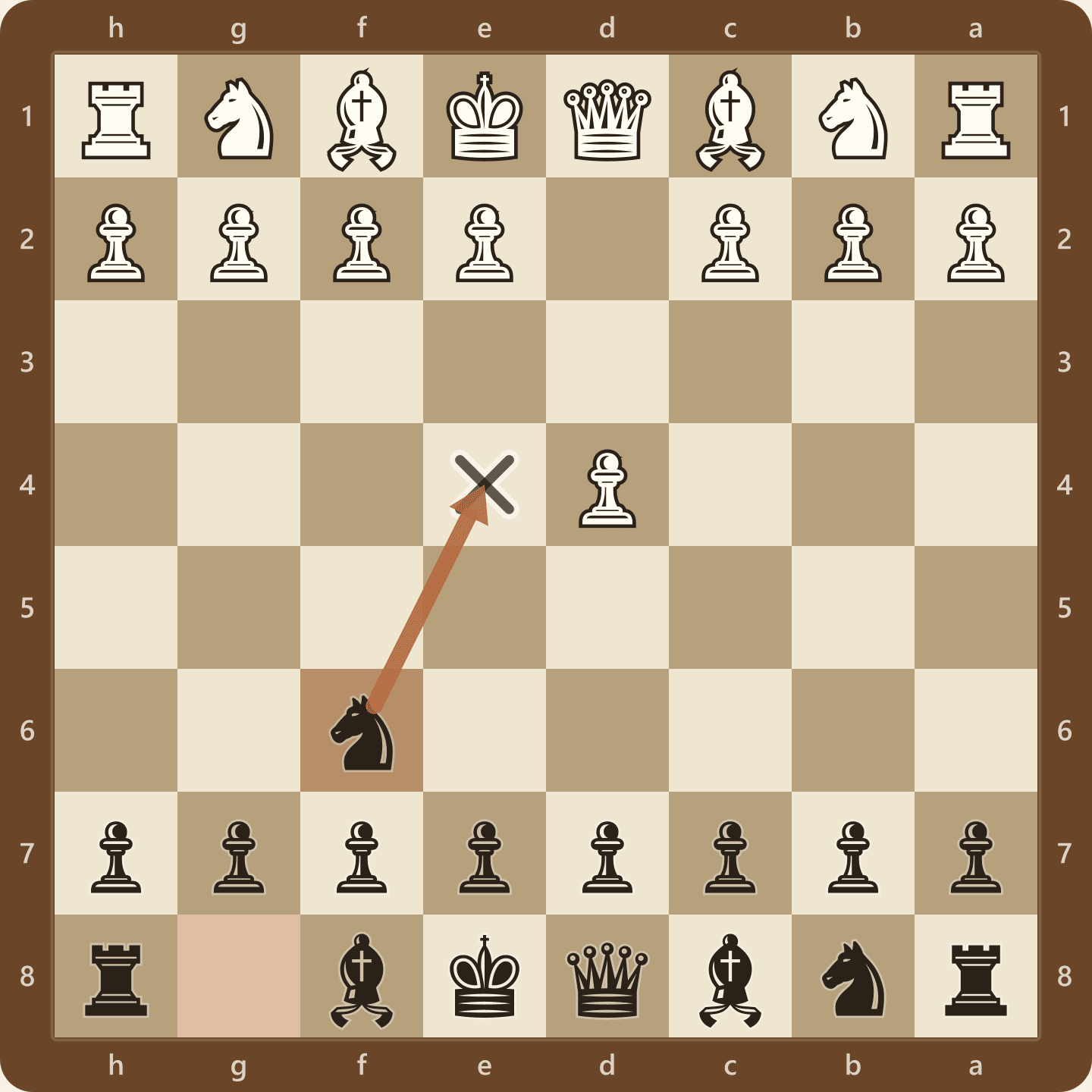
That is what the golden rules are for. Control the centre, develop toward it, get your king castled, and do not move the same piece twice before the rest are out. Four rules, no memorisation, and they keep working in positions no book covers. The full argument is on the opening principles page, and the study-time arithmetic on how much theory you need.
The Scholar's Mate problem
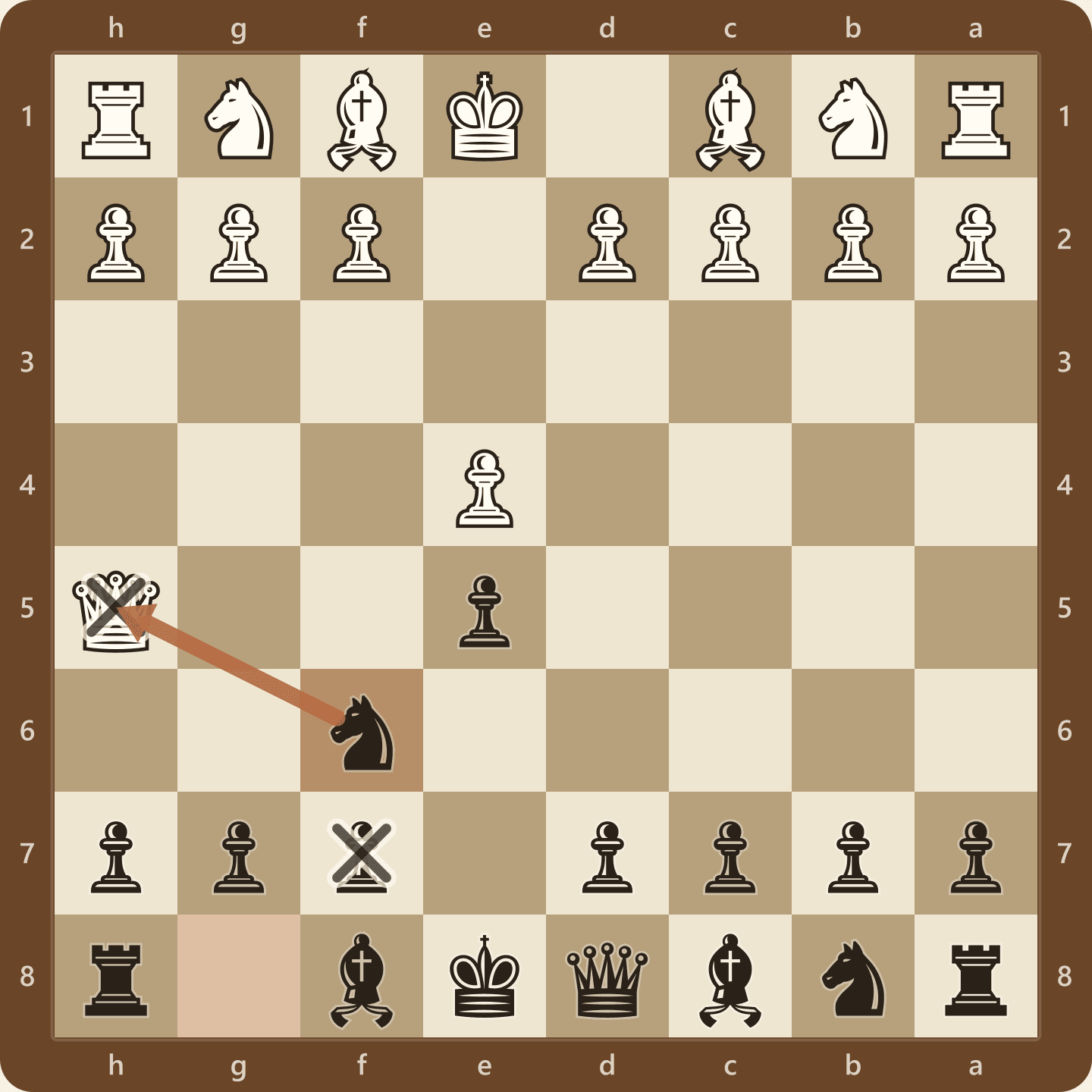
Every beginner is told not to bring the queen out early. At the 600 band, 1.e4 e5 2.Qh5 grades A for White, at 0.524 across 162,535 games, and it is played in 3.81% of all games in that band. The advice is correct about chess and wrong about your opponents.
The answer is one move. After 2...Nf6, Black scores 0.522 across 38,235 games at the 600 band, which flips the position from White-favourable to Black-favourable in a single developing move that also attacks the queen. Learn that, learn the Scholar's Mate pattern behind it, and you have removed a whole category of loss.
Notice also what happens to 2.Qh5 as you climb: it falls to a B grade from the 1000 band up and its share of games collapses from 3.81% to 0.13% by 1800. That is what an opening looks like when its only asset is your opponent's inexperience.
What not to play yet
Two openings that appear on almost every beginner list are missing here, and one is missing for an unusual reason.
The Evans Gambit (1.e4 e5 2.Nf3 Nc6 3.Bc4 Bc5 4.b4) has zero rows in our win-rate dataset at every rating band, and so do the Catalan Opening, the Grünfeld Defense, the Benko Gambit and the Stonewall. They are in our move database with verified lines, but the explorer sample we ingested never reaches them, so we have no score and we will not estimate one. Ungraded is not the same as bad.
The King's Gambit does have a score, and it is not a beginner opening despite the 0.522 B grade at 600. It carries 190 named lines and it peaks at the 1000 band rather than at 600, which means it pays off once you can already calculate. Come back to it. The same applies to the Evans Gambit once we have data for it.
Frequently asked questions
What are the three golden rules of the opening in chess?
Control the centre, develop your pieces toward it, and castle early. A useful fourth is not moving the same piece twice before the others are out. They matter more than your opening choice does at this level: the gap between the best and a merely decent beginner opening is about two points of score, while 44.8% of games in the 600 band contain a material-losing mistake.
What should my first three moves in chess be?
As White: 1.d4, 2.c4 and then develop (the Queen's Gambit, 0.553 in the 600 band across 77,143 games), or 1.e4, 2.Nf3 and 3.d4 (the Scotch, 0.546 across 75,690). As Black against 1.e4: 1...c6 and 2...d5 with the bishop coming out before ...e6 (the Caro-Kann, 0.508 across 127,035). Against 1.d4: 1...Nf6, which outscores 1...d5 by 0.500 to 0.476 at the same band.
What are the best five opening moves in chess?
By score in the 600 band, White's five best mainstream starts are the Queen's Gambit (0.553), the London System via 2.Bf4 (0.547), the Scotch Game (0.546), the Italian Game (0.537) and the Ruy Lopez (0.535). All five carry an A or S grade. The gap between them is smaller than the gap between any of them and playing no plan at all.
What is the easiest chess opening for beginners?
The London System, on a strict count: four to five named lines sit beneath it in the ECO book, against 184 for the Italian and 1,033 for answering 1.e4 with 1...e5. It also scores 0.547 at the 600 band. The catch is its curve. It falls to 0.542 at 1000, 0.530 at 1400 and a C grade at 1800 in its strict move order, the steepest decay of anything in the top half of our ranking.
How many openings should a beginner learn?
Three. One as White, one against 1.e4 and one against 1.d4. A fourth buys almost nothing, because opening choice is worth roughly two points of score at this level while 44.8% of games in the 600 band contain a material-losing mistake. Spending that study time on tactics buys a lot more.
Should beginners study openings at all?
Enough to have a plan for the first four moves and an answer to the two or three traps you will meet constantly, and no further. The Wayward Queen Attack (1.e4 e5 2.Qh5) is played in 3.81% of games at the 600 band and grades A for White there; the single move 2...Nf6 turns it into 0.522 for Black across 38,235 games. That is the correct size of a beginner's opening study.
Should I copy Magnus Carlsen's openings?
No, and this is the most common mistake in beginner opening choice. Elite players pick openings for positions they can outplay other elite players in, and rotate them to dodge preparation. Our entire dataset stops at the 1800 band, so it says nothing about master play, and a list built on grandmaster preference is answering a question you did not ask. The Berlin Defense is the cleanest example: a world-championship drawing weapon that grades D in all four of the bands we measure.