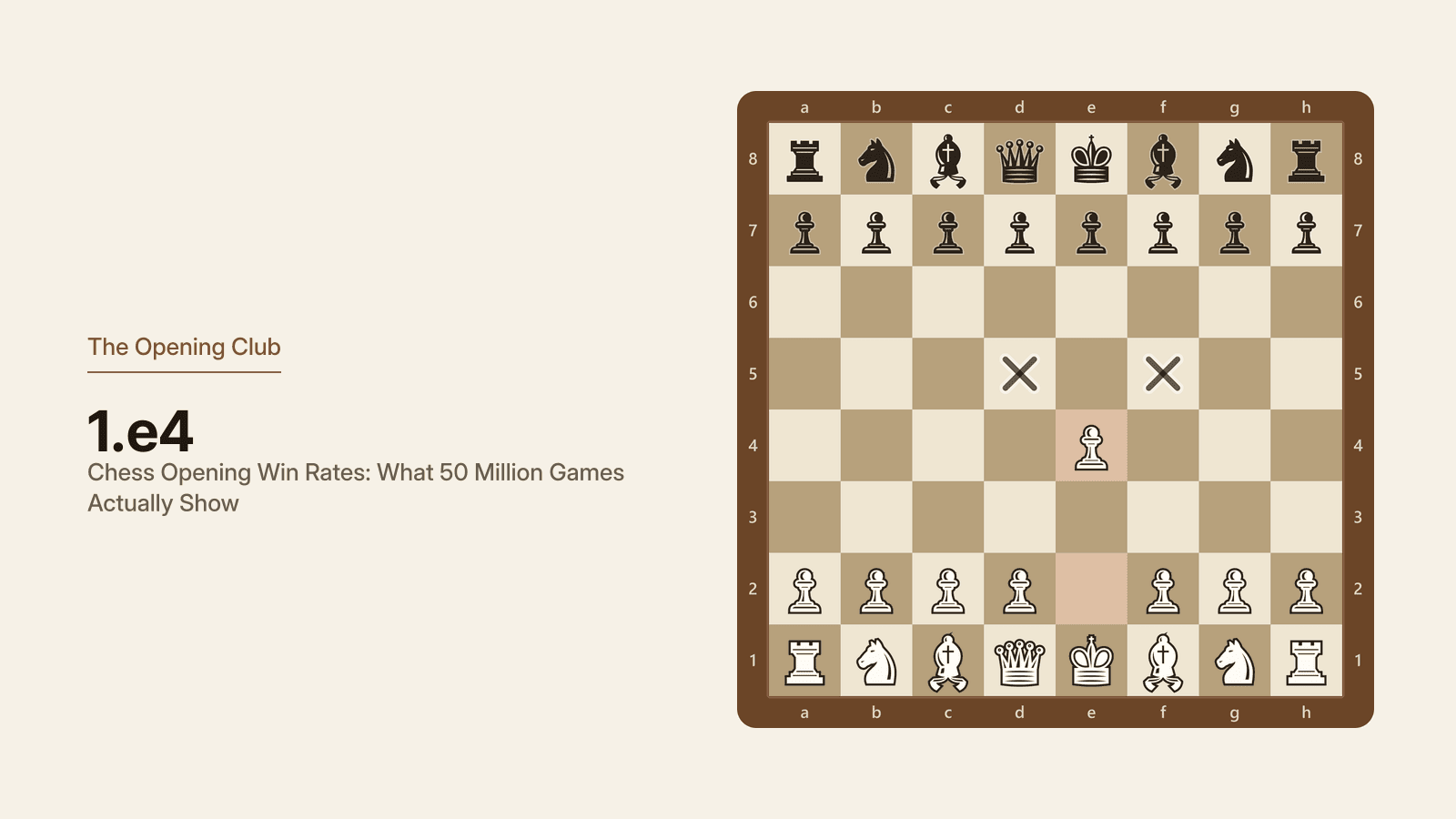
A chess opening win rate is the share of games played from one opening position that ended as a White win, a Black win, or a draw. The number only means something with three things attached to it: the rating band it covers, how many games sit behind it, and which database it came from.
Strip any of those three away and chess opening win rates become decoration. "The Sicilian scores 52%" is not a fact, it is a fragment. At which rating? Out of how many games? From masters, or from Tuesday-night blitz? Change any of those and the number moves.
Everything below comes from one place: the Lichess open database, May 2026 export, rapid and blitz games only, split into four rating bands. Lichess publishes its full game archive as monthly public dumps, which is why independent analysis of it is possible at all, and the same figures surface in the opening explorer on lichess.org. The set here covers 314 opening lines. The four bands together hold about 50.1 million games, of which 49,783,179 begin with one of the 14 tracked first moves.
What the rating bands actually mean
The bands are labelled 600, 1000, 1400 and 1800. Those are the lower bounds of Lichess rating buckets, not midpoints and not averages. There is no 800 band, no 1200 band, no 1600 band. When a figure below is tagged "1000 band", it describes games in that bucket and nothing else.
This matters more than it sounds. Most published opening statistics come from master databases, where the same opening behaves nothing like it does at 1000. A line that needs eight accurate moves to justify a pawn sacrifice is a different opening entirely when neither player knows move five. If you want the background on what those rating numbers represent, chess Elo ratings explained covers it.
Sample sizes per band, counting only the 14 first moves:
- 600 band: 4,206,514 games
- 1000 band: 14,075,034 games
- 1400 band: 10,678,582 games
- 1800 band: 20,823,049 games
The 1000 band is fat because that is where most online rapid and blitz players live. The 600 band is thin by comparison, so figures from it wobble more.
First moves, by the numbers
| White's first move (White win %) | 600 band | 1000 band | 1400 band | 1800 band |
|---|---|---|---|---|
| 1.e4 | 50.18% (n=2,849,881) | 50.02% (n=9,343,706) | 49.43% (n=6,813,943) | 49.06% (n=12,493,284) |
| 1.d4 | 49.89% (n=836,518) | 50.90% (n=3,174,376) | 50.47% (n=2,614,908) | 50.09% (n=5,546,280) |
| 1.c4 (English Opening) | 48.53% (n=57,286) | 51.22% (n=265,462) | 51.19% (n=270,653) | 50.73% (n=741,296) |
| 1.Nf3 | 48.15% (n=114,838) | 49.89% (n=336,836) | 50.32% (n=260,541) | 50.83% (n=644,679) |
| 1.b4 | 44.60% (n=9,818) | 52.48% (n=45,809) | 52.16% (n=48,586) | 51.26% (n=100,838) |
| 1.f3 | 37.63% (n=6,726) | 41.03% (n=12,008) | 39.84% (n=6,794) | 46.47% (n=13,106) |
Two things jump out.
The first is that 1.e4 is not the best-scoring first move at any band above 600. It is the most played by a distance, but 1.d4 outscores it in three of four bands, and 1.c4 outscores both at 1000 and 1400. The second is 1.f3, which loses far more than it wins in every band. That is the worst first move in the set by a wide margin, and it is the closest thing this data has to a joke.
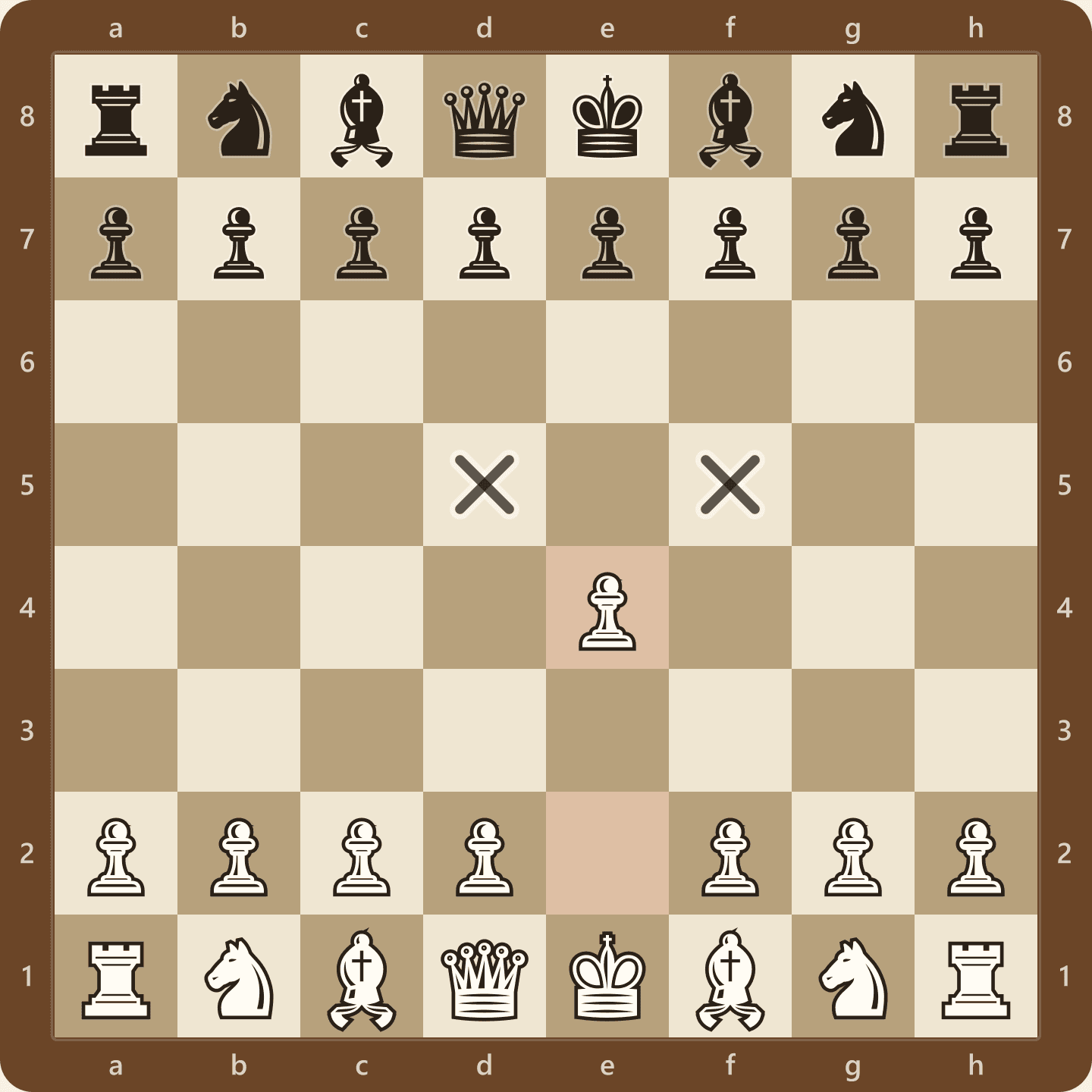
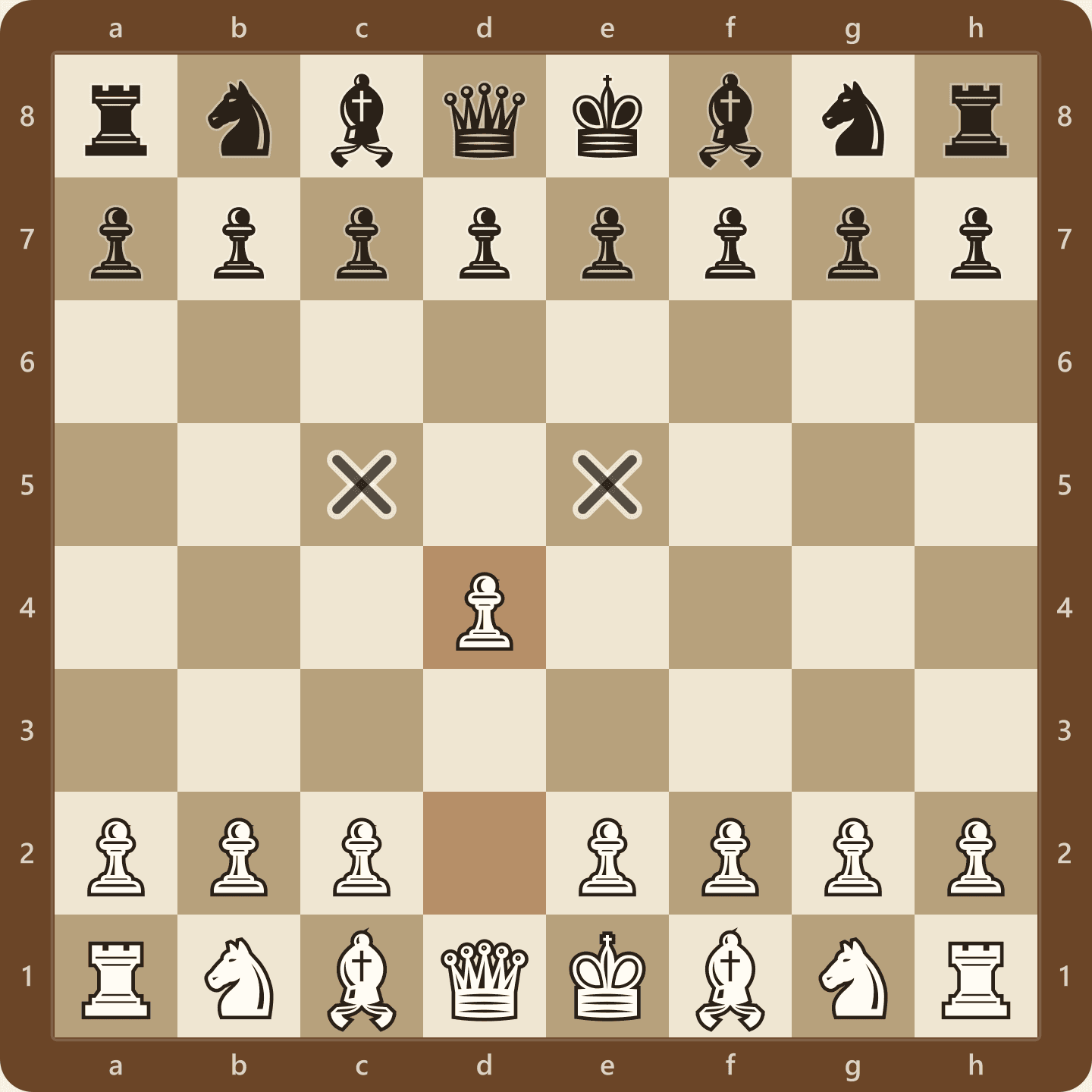
For a longer look at that split, see 1.e4 vs 1.d4 and the best first move in chess.
How Black's replies to 1.e4 score
| Black's reply to 1.e4 (Black win %) | 600 band | 1000 band | 1400 band | 1800 band | Games, all four bands |
|---|---|---|---|---|---|
| 1...c5 (Sicilian Defense) | 48.82% | 49.12% | 48.77% | 47.59% | 4,528,243 |
| 1...c6 (Caro-Kann Defense) | 49.06% | 48.69% | 48.91% | 47.48% | 2,608,306 |
| 1...e6 (French Defense) | 47.27% | 48.12% | 48.35% | 47.51% | 2,876,003 |
| 1...d5 (Scandinavian Defense) | 45.77% | 46.25% | 47.42% | 47.30% | 3,156,247 |
| 1...d6 (Pirc Defense) | 45.90% | 46.57% | 46.73% | 46.78% | 1,176,525 |
| 1...e5 | 44.67% | 45.22% | 45.40% | 45.02% | 14,491,550 |
| 1...Nf6 (Alekhine's Defense) | 43.73% | 44.19% | 46.87% | 48.88% | 421,225 |
| 1...Nc6 (Nimzowitsch Defense) | 43.30% | 44.70% | 45.16% | 47.19% | 454,971 |
Black wins less often than White in every one of those rows, which is the normal state of chess and not a defect in the data. What is worth reading is the ordering, and how it changes.
The Sicilian and the Caro-Kann sit at the top at every band. Alekhine's Defense is the biggest mover: 43.73% for Black at 600, 48.88% at 1800, a five-point swing. That is what an opening looks like when it punishes the player who over-pushes their pawns, and therefore only pays once your opponent is good enough to be tempted.
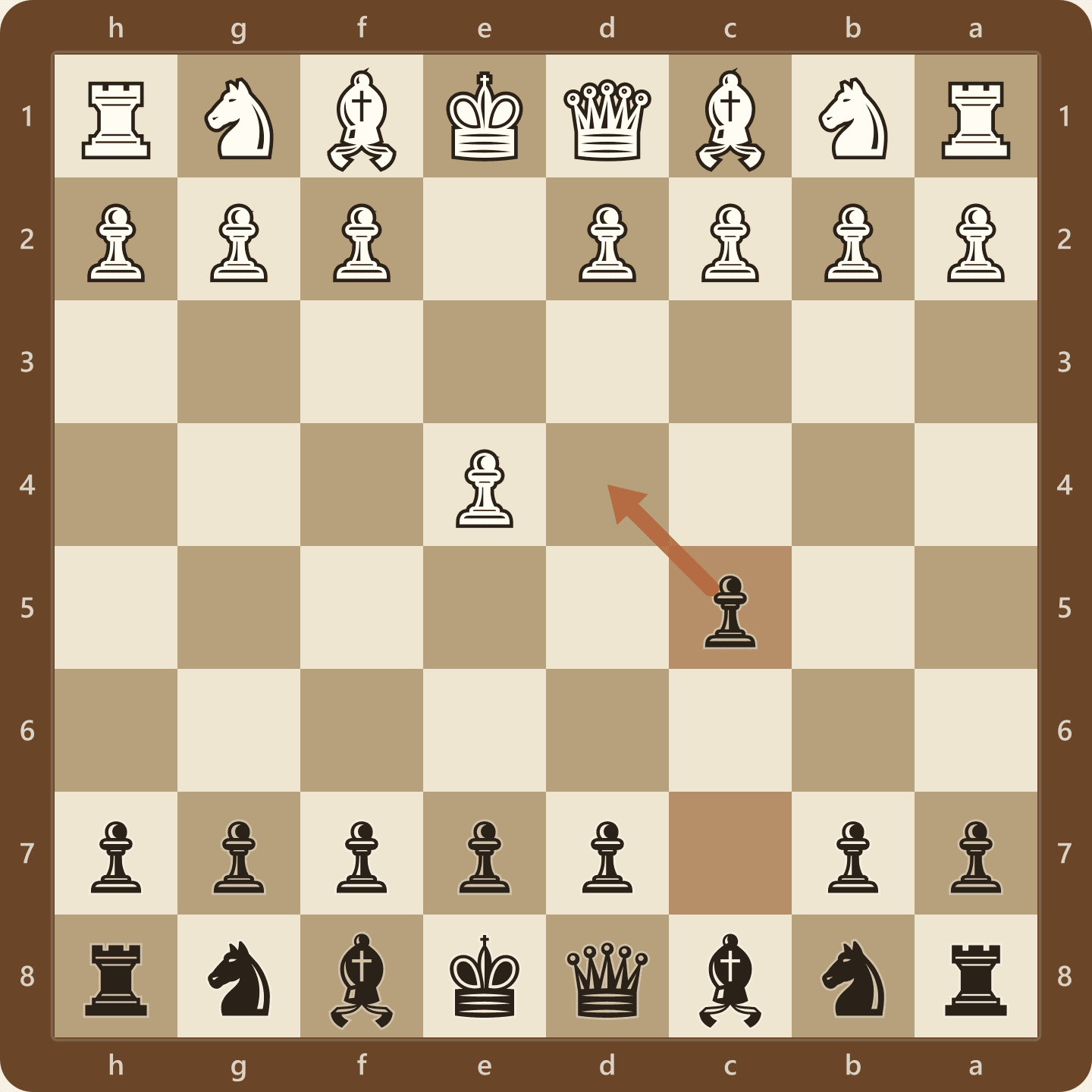
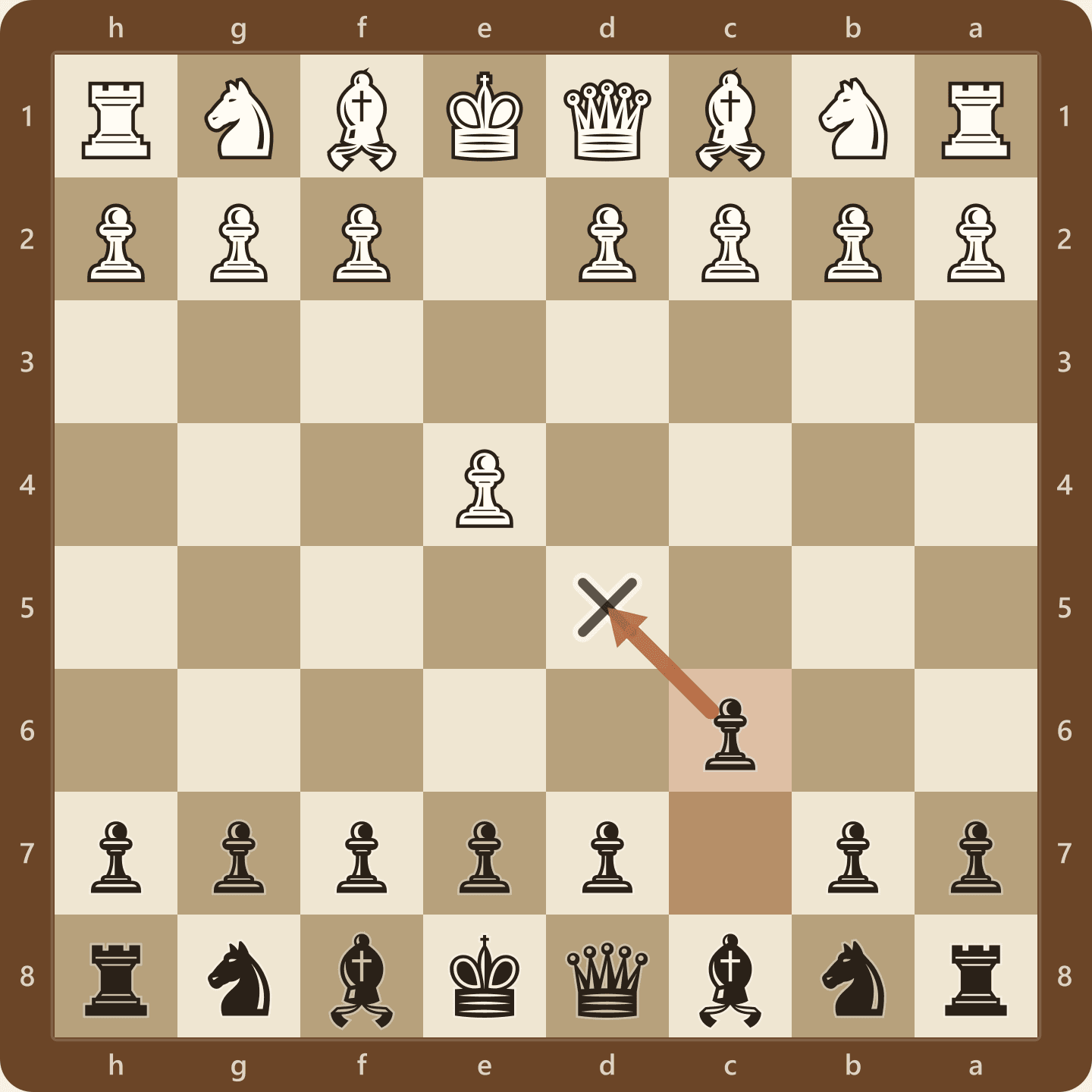
More on both in the Sicilian Defense guide and the Caro-Kann Defense guide, and on the third of that group in the French Defense guide.
Three ways a win rate will fool you
1. The rows overlap, so you cannot add them up
This is the trap that ruins most opening statistics articles, and it is worth being blunt about because this page nearly fell into it.
The 314 tracked lines are nested inside each other. At the 1000 band, 1.e4 is played in 65.95% of games and 1.e4 e5 in 36.11%, because every 1.e4 e5 game is also a 1.e4 game. Add the games column across all 1,255 rows in this dataset and you get 185,454,729. That number is not a count of games. It is a count of times a game was observed passing through some tracked position, and one game contributes to as many rows as it walks through.
The honest count is the disjoint one: 49,783,179 games across the 14 first moves, roughly 50.1 million once you include the small remainder starting with something untracked. Any article promising you "billions of games" from a Lichess opening explorer is either using a much larger export or adding up nested rows. Check which.
2. A big percentage on a small sample is noise
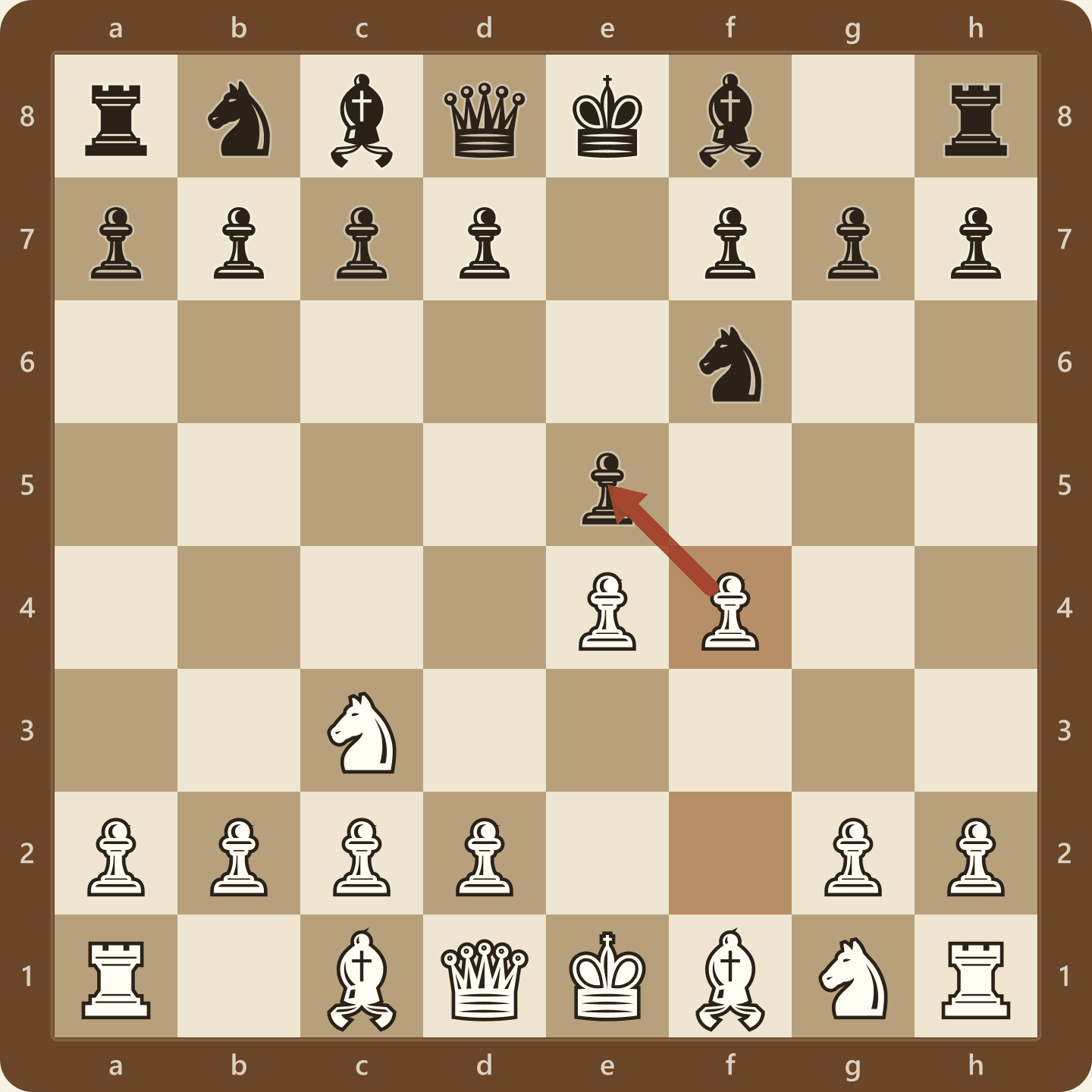
The Vienna Gambit (1.e4 e5 2.Nc3 Nf6 3.f4) scores 58.05% for White in the 600 band. That looks like the best opening on the board until you see the sample: 6,040 games, against 950,740 for 1.e4 e5 2.Nf3 in the same band.
The standard fix is a Wilson lower bound, which asks what the win rate would be in the pessimistic case given the sample size, and shrinks small samples harder than large ones. It is the reason a 200-game line does not get to outrank a 2-million-game one. The chess opening tier list uses exactly that method to grade these lines, which is why some eye-catching win rates end up graded B.
3. The band changes the answer
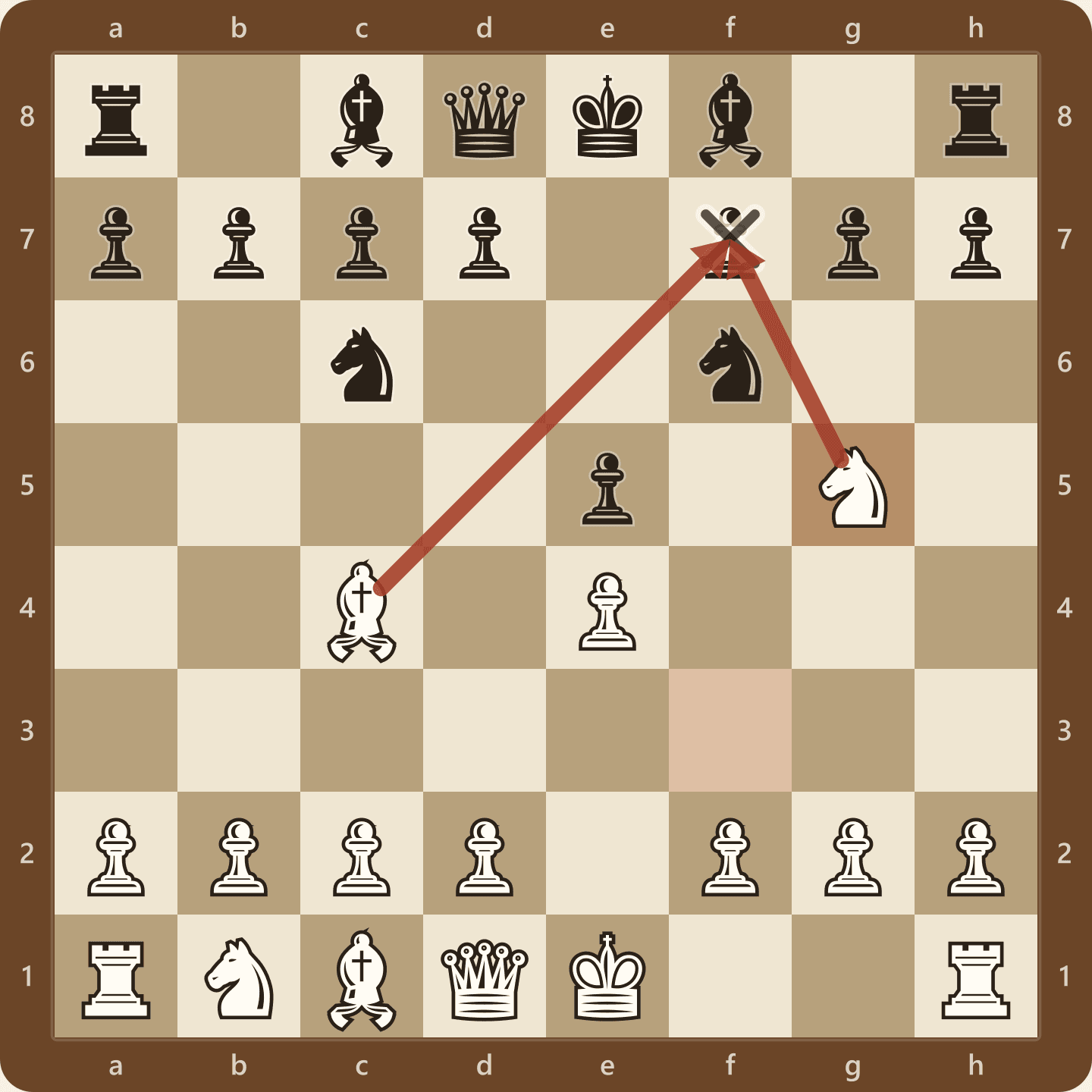
The Two Knights Knight Attack (1.e4 e5 2.Nf3 Nc6 3.Bc4 Nf6 4.Ng5), the position the Fried Liver Attack comes out of, scores 56.56% for White in the 600 band from 37,919 games. At 1800 it scores 50.15% from 72,587 games. Same moves, six and a half points of difference, explained entirely by who is sitting behind them.
That is the pattern for nearly every attacking line in this dataset. The gap between what an opening scores at 600 and what it scores at 1800 is a decent measure of how much of its win rate is theory and how much is ambush.
Which openings score best for White
Judged on White win percentage with a serious sample behind it, the standouts are consistent across bands:
- Queen's Gambit (1.d4 d5 2.c4): 53.74% at 600, 53.34% at 1000, 52.77% at 1400, 51.91% at 1800. The 1800 band alone holds 911,642 games. It is the rare opening that scores well everywhere.
- Scotch Game (1.e4 e5 2.Nf3 Nc6 3.d4): 52.87%, 54.05%, 53.17% and 52.34% across the four bands, from 394,743 games at 1000.
- Ruy Lopez (1.e4 e5 2.Nf3 Nc6 3.Bb5): 51.67%, 51.62%, 51.34%, 51.35%. Almost flat, which is unusual, and says the opening does not depend on your opponent making one specific mistake.
- Queen's Gambit Accepted (1.d4 d5 2.c4 dxc4): 54.33%, 55.33%, 55.12%, 54.14%. The highest White win rate of any major line here, and it arrives via Black's choice, not White's.
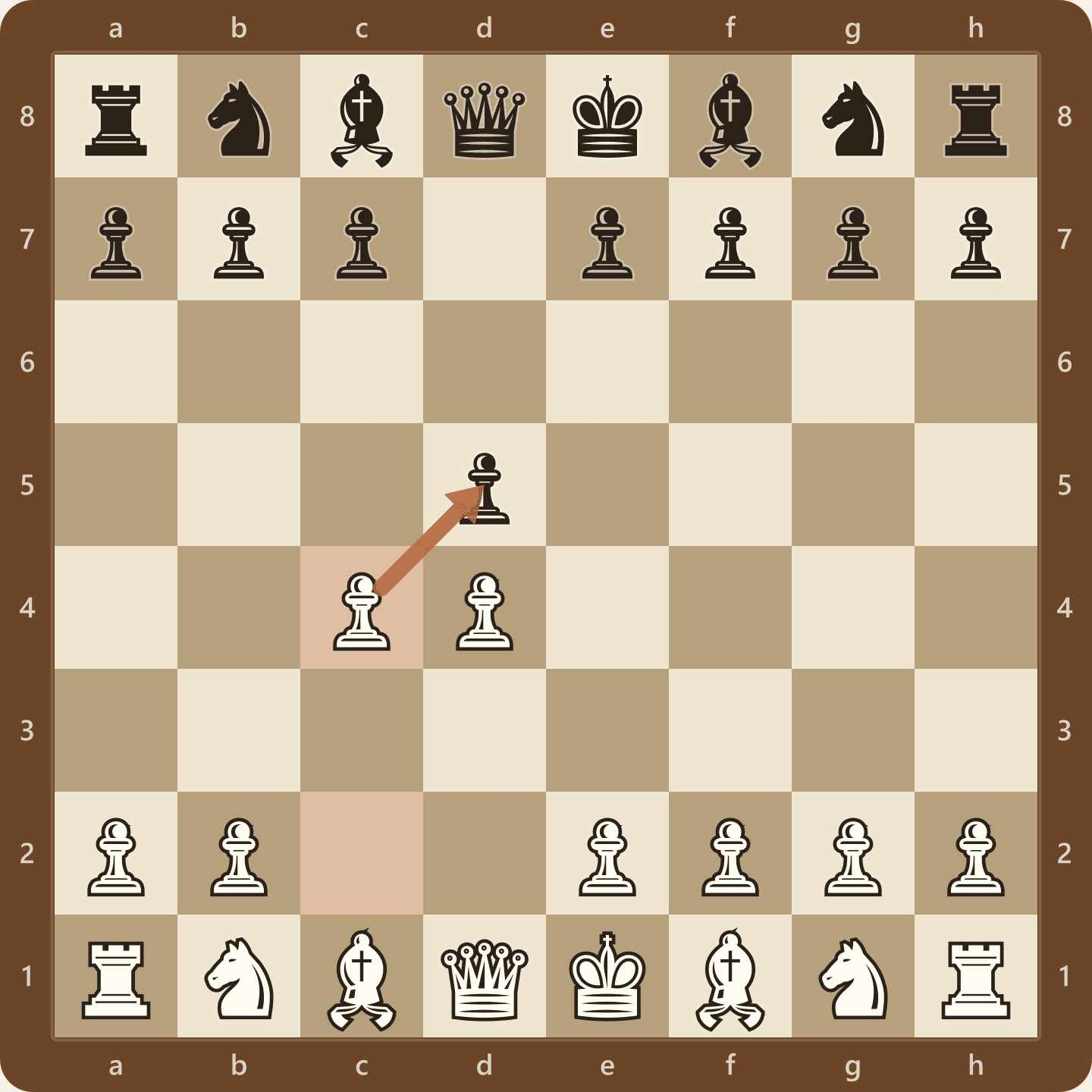
The Italian Game is the more popular choice at every band below 1800 and scores lower: 51.96%, 50.89%, 50.30%, 49.83%. By the 1800 band it is a losing proposition for White by a hair. Popularity and performance are different questions, which is the subject of the most popular chess openings.
Which openings score best for Black
Black's ceiling is lower everywhere, so the list is short:
- Sicilian Defense: 48.82%, 49.12%, 48.77% and 47.59%, from 4,528,243 games total. The most reliable Black scorer in the set.
- Caro-Kann Defense: 49.06%, 48.69%, 48.91% and 47.48%. Edges the Sicilian at the 600 and 1400 bands.
- Stafford Gambit (1.e4 e5 2.Nf3 Nf6 3.Nxe5 Nc6): 46.35% at 600, then 52.54% at 1000 and 51.67% at 1400, before falling back to 48.45% at 1800. One of the few lines where Black outscores White outright, and only in the middle two bands. The 1000 band sample is 25,774 games.
- Sicilian Najdorf (1.e4 c5 2.Nf3 d6 3.d4 cxd4 4.Nxd4 Nf6 5.Nc3 a6): 49.38% at 1000, 49.11% at 1400, 48.35% at 1800. The 600 band holds only 221 games, which is far too few to quote, so no figure for it is published here.
That last bullet is the shape of the honest answer to "what is the highest win rate opening for Black": the flashy lines have thin samples, and the lines with fat samples cluster within a point of each other.
Draw rates
Draws are rare at these levels. Across the tracked lines, draw percentages run from 2.69% to 7.25%. That is a different world from elite classical chess, where draws are the normal result, and it is worth remembering when you read an opening described as "drawish" in a book written for titled players.
The 600 band draws more than the 1000 and 1400 bands, which surprises people: 1.e4 draws 4.53% at 600 and 3.72% at 1000. Stalemates, threefold repetitions from not knowing how to finish, and clocks running out into insufficient material all show up more at the bottom than in the middle.
The gambits draw least. The King's Gambit draws 2.73% at the 1000 band, the lowest figure of any well-sampled line in the set. That is what "sharp" looks like as a number.
Gambits, and where their win rates come from
| Gambit (White win %, except where noted) | 600 band | 1000 band | 1400 band | 1800 band |
|---|---|---|---|---|
| Vienna Gambit (1.e4 e5 2.Nc3 Nf6 3.f4) | 58.05% (n=6,040) | 58.04% (n=34,510) | 57.35% (n=26,112) | 55.26% (n=42,560) |
| Danish Gambit (1.e4 e5 2.d4 exd4 3.c3) | 50.72% (n=5,410) | 54.04% (n=44,295) | 54.86% (n=44,803) | 54.41% (n=88,052) |
| King's Gambit (1.e4 e5 2.f4) | 50.86% (n=27,129) | 53.64% (n=164,805) | 53.36% (n=182,940) | 51.34% (n=400,353) |
| Blackmar-Diemer Gambit (1.d4 d5 2.e4) | 43.86% (n=27,577) | 49.37% (n=69,221) | 51.62% (n=54,777) | 52.00% (n=111,362) |
| Englund Gambit (1.d4 e5), Black win % | 43.70% (n=83,695) | 47.34% (n=268,668) | 48.06% (n=205,528) | 47.09% (n=327,688) |
The Blackmar-Diemer is the interesting one. It is the only gambit here that gets better as the band goes up, from 43.86% at 600 to 52.00% at 1800. A gambit that requires the sacrificing side to actually use the initiative does nothing in the hands of a 600 player, and that eight-point climb is the price of the skill it needs. Compare it with the Vienna Gambit, which is at its best in the lowest band and decays from there.
If you want the definition side of this, what is a gambit in chess covers the term itself, and the best chess gambits, ranked does the ordering.
The London System
The London System attracts more argument than any other opening at these levels, so here is its number. The accelerated move order 1.d4 d5 2.Bf4 scores 53.00% for White at 600, 52.35% at 1000, 51.08% at 1400 and 50.38% at 1800, from 438,927 games in the 1000 band alone.
That is a strong White score at the bottom that erodes steadily upward, and by the 1800 band it is worth roughly the same as playing 1.d4 and thinking. The complaint that the London is boring is a taste argument. The complaint that it stops working is, on this data, a timing argument: it works, and then it works less.
What this data does not cover
Being clear about the edges matters as much as the figures.
- Rapid and blitz only. No classical, no bullet, no correspondence. Opening choice behaves differently when there is time to calculate.
- Online only, and one site. These are Lichess games. Chess.com ratings run on a different scale, so a 1400 there is not a 1400 here.
- No master data. Nothing above the 1800 band is represented, so this page cannot tell you what wins at 2400.
- 314 lines, not every line. The Catalan Opening, the Benko Gambit and the Grünfeld Defense are not among the tracked lines, so no win rate for them appears anywhere on this page. The Nimzo-Indian Defense is tracked but thinly played at the bottom: 464 games in the 600 band, which is not enough to publish. The King's Indian Defense has the same problem there, with 1,551 games.
- One month. A May 2026 export. Opening popularity moves with whatever the streamers covered last.
A Magnus Carlsen video showing a line he likes is evidence about that line at 2800, and no evidence at all about the 1000 band. Those are separate questions with separate answers.
How to use win rates without wrecking your repertoire
Win rates are a filter, not an instruction. A one-point difference between two openings matters far less than whether you enjoy the resulting positions enough to play them a thousand times.
Three rules that survive contact with the data:
- Read the band you are actually in. If you are 1000 rapid, the 1800 column is not aspirational, it is irrelevant.
- Look at the sample before the percentage. Anything under about 20,000 games in a band should be treated as a hint, not a finding.
- Prefer flat lines to spiky ones. An opening whose win rate barely moves across bands (the Ruy Lopez, the Caro-Kann) will still work after you improve. One that spikes at 600 and fades (the Vienna Gambit, the Two Knights Knight Attack) is renting you results you will have to give back.
To check any of this yourself, how to use a chess opening explorer walks through reading database statistics directly. For the counterpart figure on mistakes rather than results, see blunder rate by rating, and for what a blunder even is, what is a blunder in chess. The full map of the subject lives at chess openings.
Frequently asked questions
Which chess opening has the most win rate?
For White, among lines with a large sample, the Queen's Gambit Accepted (1.d4 d5 2.c4 dxc4) is highest: 54.33% in the 600 band, 55.33% at 1000, 55.12% at 1400 and 54.14% at 1800, in Lichess rapid and blitz games from May 2026. Lines with higher percentages exist, but they have small samples, and a small sample is why the answer changes every time someone asks this question.
What chess opening has the highest win rate for white?
Among the openings White gets to choose, the Queen's Gambit (1.d4 d5 2.c4) is the most consistent, between 51.91% and 53.74% depending on band, from hundreds of thousands of games in each. The Vienna Gambit scores higher (55.26% to 58.05%) but from a fraction of the sample, and it fades as the rating band rises.
Which chess opening has the highest win rate for Black?
The Stafford Gambit (1.e4 e5 2.Nf3 Nf6 3.Nxe5 Nc6) is the only line here where Black outright outscores White, at 52.54% in the 1000 band and 51.67% at 1400, from 25,774 and 21,847 games. It falls to 48.45% at 1800. For a defense that holds up at every level, the Sicilian is the better answer at 47.59% to 49.12%.
What are the best chess opening win rates for beginners?
In the 600 band the strongest White scores come from the Queen's Gambit (53.74%), the accelerated London System (53.00%) and the Scotch Game (52.87%). For Black, the Caro-Kann (49.06%) and the Sicilian (48.82%). Note how narrow those margins are: the gap between the best and worst mainstream choice at that level is a few points, far smaller than the effect of not hanging pieces.
Are Lichess win rates the same as Chess.com win rates?
No. The rating scales differ, so a 1400 on one site is not a 1400 on the other, and the player pools differ in time-control mix. Directionally the two agree on which openings score well, but the exact percentages do not transfer. Every figure on this page is Lichess rapid and blitz, May 2026.
Why do the percentages not add up to 100?
Each row's White, draw and Black percentages do add to 100. What you cannot add up is the popularity or games columns across different openings, because the lines are nested: a 1.e4 e5 game is counted inside 1.e4 as well. Summing all 1,255 rows in this dataset gives 185 million, but only about 50.1 million distinct games sit behind it.